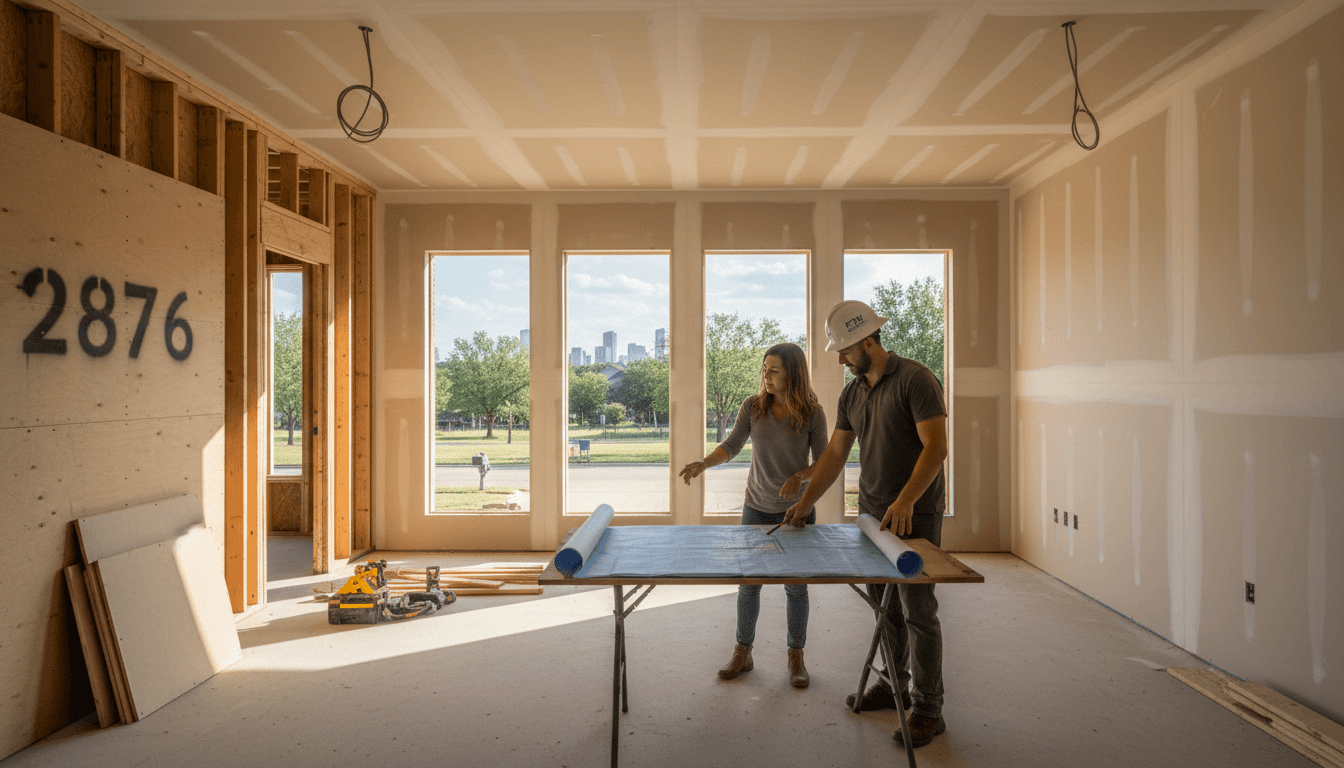

The total rental vacancy cost Fort Worth property owners experience is calculated through lost monthly income combined with turnover expenses that average $1,800 per unit. Because a single month of vacancy can represent nearly 10 percent of annual rental revenue, the speed of the renovation turn is the primary factor determining your overall return on investment.
For Fort Worth real estate investors, a vacant rental property represents more than just a quiet hallway. It is a daily drain on capital that erodes the annual yield of your portfolio. Every twenty-four hours your unit remains off the market, you are not simply losing gross rent; you are absorbing the compounding weight of property taxes, insurance premiums, and utility costs without any offsetting income. The renovation turn is often the primary culprit behind these extended vacancies. If your make-ready process is uncoordinated, your return on investment suffers. In this guide, we will break down the precise daily cost of vacancy in North Texas, expose the hidden expenses of an empty unit, and outline how a sophisticated renovation strategy can drastically reduce your turnover timeline. By bridging the gap between investor efficiency and homeowner quality, you can secure a tenant faster and protect your bottom line.
Calculating the Daily Rental Vacancy Cost in Fort Worth

Quantifying the rental vacancy cost Fort Worth investors face requires looking beyond the missing monthly check. If a property in neighborhoods like Tanglewood or Fairmount rents for a median $2,000 per month, the gross income loss is approximately $66 per day. However, that figure only accounts for the top line. The true daily burn is significantly higher when you factor in the fixed expenses that refuse to pause while the home sits empty.
In North Texas, carrying costs remain aggressive regardless of occupancy. Because Texas relies heavily on property taxes in the absence of a state income tax, Tarrant County assessments represent a massive daily drain. When you combine those taxes with insurance premiums and the necessity of keeping the electricity and water running to prevent mold or plumbing issues, a vacant $2,000 unit actually costs the owner closer to $95 per day.
For a local landlord, losing a single month to a slow make ready turn contractor in DFW is not just a minor inconvenience; it represents an 8.3 percent hit to your annual gross revenue. If a rental renovation in Fort Worth stretches into six weeks due to poor project management, that loss climbs toward 12 percent of your yearly earnings. Every day a contractor fails to show up or answer their phone, they are effectively removing nearly $100 from your pocket. Understanding this math is the difference between a profitable investment and one that barely services its own debt.
The Hidden Expenses of an Empty Property
Professional investors often use the 50 percent rule to estimate operating costs, assuming half of gross income will disappear into taxes, insurance, and maintenance. Vacancy is a critical, yet often underestimated, variable within this formula. While some underwriting models suggest a 7 percent rule for vacancy reserves, this figure is dangerously optimistic if your make ready turn contractor in DFW lacks a sense of urgency. In a market where a single month of downtime represents 8.3 percent of your annual revenue, a slow renovation immediately pushes you past that safety net before you even list the property.
Beyond the math, empty properties in North Texas face physical risks that occupied homes do not. During the extreme temperature swings common in Fort Worth, a vacant unit is a liability. Without a tenant to notice a failing HVAC unit or a dripping pipe during a hard freeze, a minor mechanical issue can escalate into a catastrophic pipe burst. Furthermore, darkened houses attract unwanted attention. Vandalism and copper theft are legitimate fix and flip renovation costs that landlords must account for when a project stretches into its third or fourth week of inactivity.
There is also the management friction cost. Coordinating showings for a unit that is still mid-renovation is an inefficient use of a property manager’s time. Prospects who view a property covered in drywall dust or missing cabinet doors are less likely to sign a premium lease, forcing more showings and increasing the total rental vacancy cost Fort Worth owners must absorb. To keep the 50 percent rule from becoming a 60 percent reality, your turn schedule must be aggressive. Every day the house sits empty is a day you are paying for the privilege of owning a liability rather than an asset.
Why the Renovation Turn is the Real Profit Killer

Most landlords blame a slow market or a difficult tenant pool when a property sits vacant, but the real profit killer usually happens before the first listing photo is even taken. The renovation turn is the most controllable variable in your investment strategy. While you cannot control interest rates or property tax assessments in Tarrant County, you can control the schedule of your make ready turn contractor in DFW. When a contractor ghosts you for a week or pushes a start date by three days, they aren't just being unprofessional; they are actively draining $50 to $100 per day from your bottom line.
At Bridge & Build, we believe that showing up on time and answering the phone is a financial strategy, not just a courtesy. In a market as competitive as Fort Worth, professional project management is the only way to protect your ROI. If a crew is three days late starting a project, they have already effectively increased your rental vacancy cost Fort Worth by nearly $300. Over a portfolio of multiple properties, these small delays compound into thousands of dollars in lost gross income that can never be recovered.
The difference between a profitable turn and a money pit often comes down to the scope and the schedule. A standard lipstick turn, consisting of professional cleaning, paint touch ups, and minor hardware updates, should be a surgical three day operation. Even a more intensive rental renovation in Fort Worth involving luxury vinyl plank flooring, cabinet refinishing, and new countertops should follow a structured 14 day timeline. When these projects stretch into four or five weeks due to poor coordination or lack of oversight, the property ceases to be an asset and becomes a liability. Speed and reliability are the primary tools used to bridge the gap between a vacant unit and a cash flowing one.
Typical Rental Turnover Timelines in North Texas
Understanding how long it takes to turn a rental property is essential for accurate financial forecasting. In the North Texas market, turnover schedules generally fall into three tiers based on the scope of work required to reach rent-ready status. Establishing a realistic schedule is the only way to mitigate the rental vacancy cost Fort Worth landlords face during every transition.
The 24 to 48 Hour Refresh: This tier applies to units in excellent condition where the previous tenant was meticulous. The scope is limited to professional deep cleaning, steam cleaning existing carpets, and minor paint touch-ups. This is a surgical strike designed to get the property back on the market within two days.
The 5 to 7 Day Standard Turn: Most DFW rentals require this mid-level update. It typically involves a full interior repaint and the installation of new flooring, such as luxury vinyl plank (LVP). A make ready turn contractor in DFW can execute this efficiently by staging materials locally to avoid transit delays.
The 14+ Day Full Rehab: When a unit needs a new kitchen, bathroom updates, or significant electrical work, the timeline expands. This is a comprehensive rental renovation in Fort Worth that addresses both aesthetics and infrastructure.
Localization also dictates the schedule. Properties in high-end markets like Southlake or Aledo often require premium finishes; including granite countertops or specific hardwood-look LVP; to justify top-tier rents. If these specialized materials are not managed correctly, supply chain gaps can easily add a week to the vacancy. Conversely, projects in areas like Benbrook often prioritize speed and extreme durability, using standardized materials that are readily available at local suppliers to ensure the unit is producing income as quickly as possible.
Bridging the Gap Between Investor Efficiency and Homeowner Quality

Property owners in North Texas frequently fall into one of two traps. They either hire the lowest-bid labor that produces sub-par results requiring immediate rework, or they hire high-end custom builders who treat a rental turn like a primary residence remodel. Both paths significantly increase the rental vacancy cost Fort Worth owners suffer by dragging out the calendar. If a crew produces poor work that a city inspector or a prospective tenant rejects, the owner pays for that failure in daily carrying costs while the contractor restarts the project.
The Bridge & Build approach fuses the speed of an investor-focused operation with the precision of a high-quality rental renovation in Fort Worth. We eliminate the rework cycle by executing the scope correctly the first time. This ensures the property meets the aesthetic standards of modern renters without the bloated timelines associated with custom construction.
Reliability also stems from strategic material procurement. Waiting on a specific backordered tile from an overseas distributor can keep a unit off the market for an extra month. We prioritize durable, high-impact materials stocked locally in the DFW metroplex. By selecting standardized luxury vinyl plank, neutral quartz, and contemporary light fixtures available at local suppliers, we prevent supply chain bottlenecks. Choosing a make ready turn contractor in DFW who understands the local supply landscape means your project moves forward every day, protecting your revenue stream from unnecessary delays.
Strategic Make Ready Steps to Minimize Vacancy Loss
Minimizing the rental vacancy cost Fort Worth owners face requires a proactive approach that begins before the previous tenant even hands over the keys. High-volume investors leverage pre-leasing strategies by listing the property with "Coming Soon" marketing and high-quality photos of past projects that reflect the intended finish level. This allows you to vet applicants and schedule showings for the day of completion while your make ready turn contractor in DFW is still on-site.
To secure a signed lease before the paint is dry, focus on three high-impact updates that dominate local search filters:
Fresh Neutral Paint: Use Sherwin Williams Agreeable Gray or Repose Gray with bright white trim. These tones maximize natural light and provide a clean canvas that appeals to the widest possible demographic.
Modern Lighting: Replace dated brass fixtures and yellowing ceiling fans with streamlined matte black or brushed nickel LED options. Lighting is the jewelry of the home; it signals to renters that the property is well-maintained.
Durable Flooring: Install luxury vinyl plank in high-traffic areas. It offers the high-end aesthetic of hardwood with the durability required for North Texas humidity and pet-friendly rentals.
A property that presents as "modern" on Zillow or Apartments.com often leases twice as fast as units burdened with 1990s-era oak cabinets and beige carpets. By investing in these specific rental renovation in Fort Worth details, you aren't just improving the asset; you are buying back time. The two weeks of rent saved through faster placement effectively pays for the renovation materials.