Professional tile installation Fort Worth maximizes property resale value while offering a durable flooring solution that accommodates the shifting nature of local slab foundations. While initial costs depend on material selection and site preparation, the longevity and moisture resistance of tile make it a premier investment for North Texas homes.
Watching a hairline fracture creep across your newly installed porcelain floor is a frustration no Fort Worth homeowner should endure. In North Texas, the reality of expansive clay soil means your foundation is constantly in motion, making professional tile installation a matter of structural engineering rather than just interior design. Choosing the wrong materials or skipping isolation membranes can turn a premium renovation into a costly repair. This guide examines the specific challenges of the Texas slab foundation and why standard installation methods often fail here. We will break down updated 2026 labor costs, compare tile longevity against luxury vinyl, and identify high ROI zones like master baths and backsplashes. From the technical precision of layout planning to climate specific maintenance, you will learn how to secure a floor that withstands the unique demands of the DFW landscape.
Why Tile Installation in Fort Worth is a Different Animal
Tile installation in Fort Worth is rarely as simple as following a national retailer’s DIY pamphlet. In Tarrant County, we contend with expansive clay soil that behaves more like a living thing than a stable foundation. When the North Texas heat dries out the ground or a sudden spring deluge saturates it, your concrete slab moves. If a contractor treats your floor like a static surface, the investment will eventually crack, pop, or tent.
At Bridge & Build Renovations, we frequently step into homes to fix both landlord specials and failed luxury installs that ignored these local realities. A generic how-to guide assumes your subfloor stays still; in Dallas-Fort Worth, it never does. While tile remains the gold standard for long-term durability and resale value, it requires a specialized technical approach to survive our climate. Choosing the right materials for flooring installation in Fort Worth means planning for movement from day one. It is not just about picking a pretty pattern. It is about engineering a surface that can handle the inevitable shift of a Texas slab without failing under pressure.
The Texas Slab Factor: Why Tiles Crack and How to Prevent It
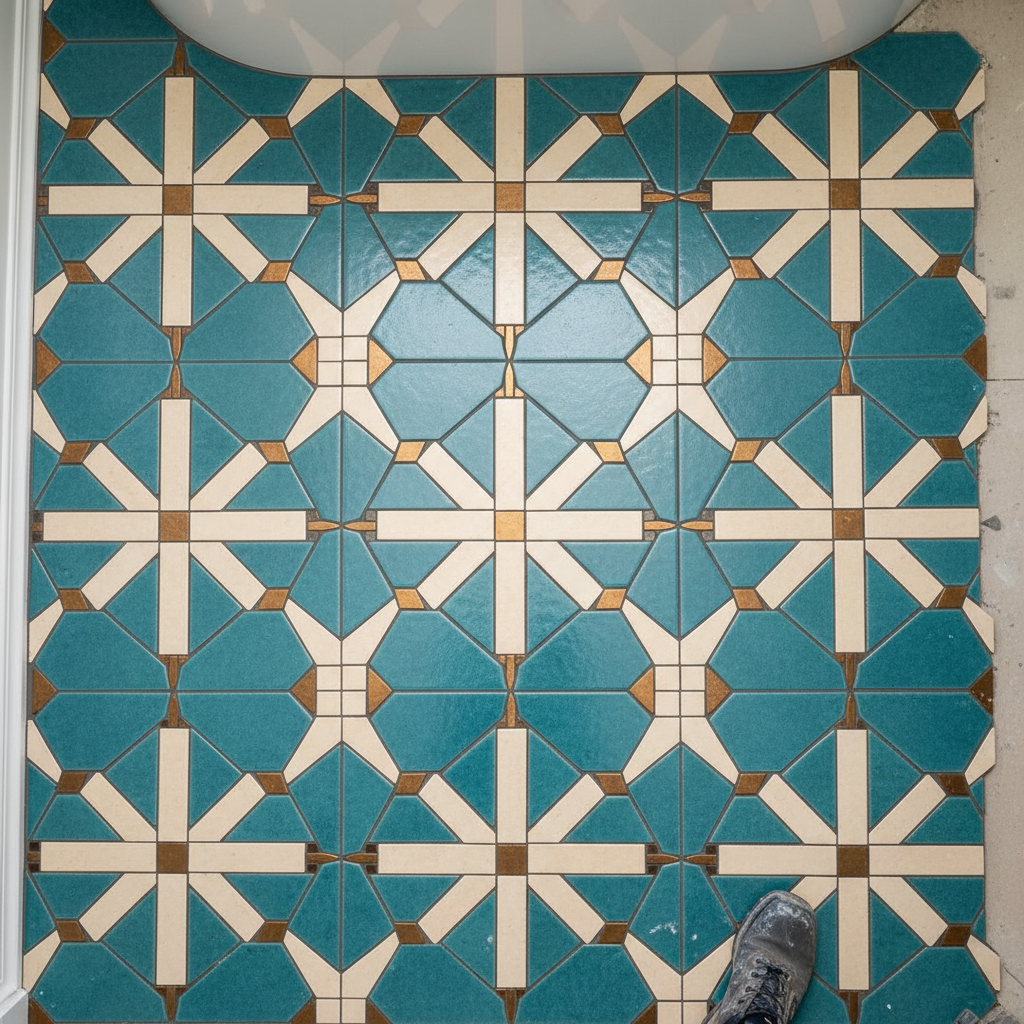
In North Texas, a concrete slab is never truly static. The expansive clay soil prevalent across Tarrant County acts like a sponge; it swells during our rainy springs and shrinks during the blistering heat of August. This constant cycle creates lateral and vertical tension within your foundation. Because porcelain and ceramic are inherently rigid materials, they cannot flex to accommodate this movement. When a rigid tile is bonded directly to a shifting slab, the energy from the concrete has nowhere to go but up through the tile, resulting in the dreaded hairline fracture or the hollow sound of a debonded floor.
Professional tile installation in Fort Worth requires a decoupling layer to bridge this gap. We utilize crack isolation membranes, such as Schluter-Ditra or high-performance liquid-applied membranes, to create a functional buffer. These products allow the slab to move independently of the tile surface. National big-box guides often treat these as optional upgrades, but in DFW, they are a technical necessity for any long-term bathroom remodel in Fort Worth.
Homeowners frequently ask: Does cracked floor tile mean foundation problems? The answer is often no. While a large, offset crack that continues up a wall might indicate structural distress, most cracked tiles are the result of poor installation math.
Issue | Probable Cause | Recommendation |
|---|---|---|
Hairline crack across multiple tiles | Lack of crack isolation membrane | Install uncoupling mat in future builds |
Tented or "popping" tiles | Missing expansion joints at room perimeters | Leave 1/4 inch gap at walls |
Single cracked tile in high-traffic zone | Subfloor void or thinset coverage failure | Remove and replace with proper trowel technique |
1/2 inch wide crack through tile and grout | Significant foundation settlement | Consult a structural engineer before retiling |
By differentiating between a structural failure and a lack of proper isolation, we save clients from unnecessary panic while ensuring their new floors are engineered for the reality of Texas geography.
Tile vs. Luxury Vinyl Plank: Where Each Flooring Wins in DFW
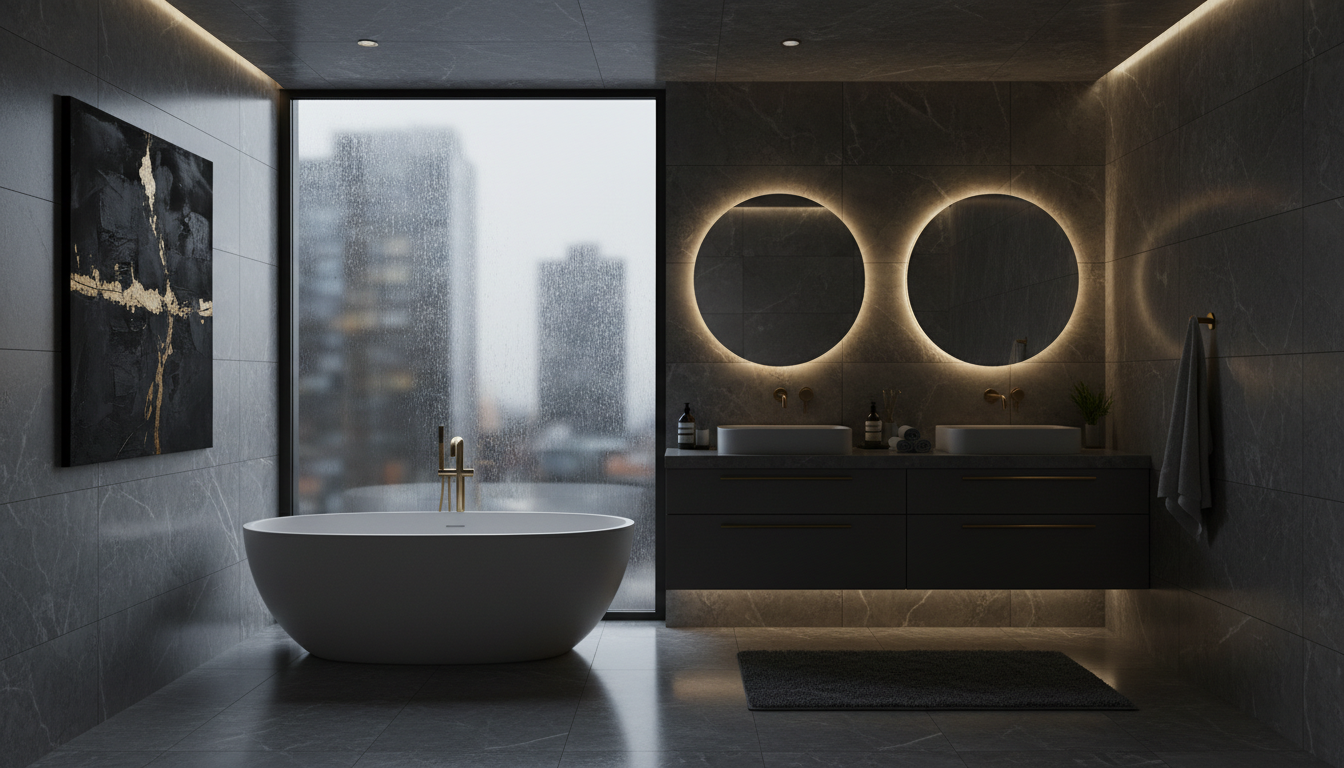
Choosing between porcelain wood-look tile and Luxury Vinyl Plank (LVP) in North Texas requires a balance of rigid durability versus flexible resilience. Porcelain tile remains the gold standard for adding long-term resale value to a property. It is essentially waterproof and heat resistant, making it the superior choice for a bathroom remodel in Fort Worth or a high-end kitchen renovation in Dallas. However, tile is inherently cold underfoot and unforgiving if the foundation experiences significant heave without proper isolation.
LVP offers a practical alternative for large, open-concept living areas where the sheer square footage makes foundation movement more noticeable. Because LVP is typically a floating floor system, it provides a degree of flex that rigid tile cannot match. It is warmer to the touch and softer for households with pets or small children, though it lacks the decades-long lifespan of a professional tile installation in Fort Worth.
Feature | Porcelain Wood-Look Tile | Luxury Vinyl Plank (LVP) |
|---|---|---|
Resale Value | High / Permanent | Moderate / Semi-Permanent |
Foundation Flex | Low (Requires membrane) | High (Floating system) |
Best For | Wet areas and high-end kitchens | Living rooms and rental turns |
Temperature | Cold and conductive | Warm and insulating |
Installation Speed | Slow / Multi-day process | Fast / Immediate foot traffic |
For real estate investors managing fast-paced rental turns in Tarrant County, LVP usually wins on speed and cost efficiency. For "forever homes" in Southlake, Keller, or Aledo, homeowners typically prefer the premium feel and permanent nature of porcelain. When planning flooring installation in Fort Worth, use tile in moisture-prone zones like mudrooms and laundry rooms, and consider LVP for expansive upstairs areas where weight and slab movement are secondary concerns.
Understanding Tile Installation Costs in Fort Worth for 2026
Navigating the financial side of a renovation requires more than just looking at the price tag on a box of tile. For tile installation in Fort Worth, labor rates for 2026 typically range from $5 to $22 per square foot. This wide gap reflects the technical complexity of the job. A standard 12x24 porcelain tile installed in a straight grid is significantly more efficient to lay than a specialized herringbone pattern or small mosaics. These intricate designs involve more frequent cuts, increased material waste, and significantly more time spent on precision layout and grout cleanup.
Low-ball quotes often hide a dangerous reality; they frequently omit critical subfloor preparation. In North Texas, skimping on floor leveling or skipping the crack isolation membranes discussed earlier is a recipe for immediate project failure. A professional quote for flooring installation in Fort Worth should always account for the labor and materials needed to ensure the substrate is flat and decoupled from the shifting slab.
Homeowners often ask how much it costs to tile a 2,000 square foot house. For a full-home update using quality porcelain and proper underlayment, a realistic DFW estimate including both materials and labor typically falls between $28,000 and $50,000.
Installation Type | Labor Cost (Sq. Ft.) | Characteristics |
|---|---|---|
Standard Large Format | $5 – $9 | 12x24 or larger, simple offset |
Intricate Patterns | $10 – $16 | Herringbone, chevron, large hexagons |
Mosaic & Detailed Work | $17 – $22+ | Small formats, shower pans, custom niches |
Choosing a cheaper labor rate usually means sacrificing the specialized prep work that protects your tile from the clay soil shifts unique to Tarrant County. Investing in proper installation upfront prevents the far higher cost of tearing out a cracked floor three years later.
High ROI Zones: Bathrooms and Kitchen Backsplashes
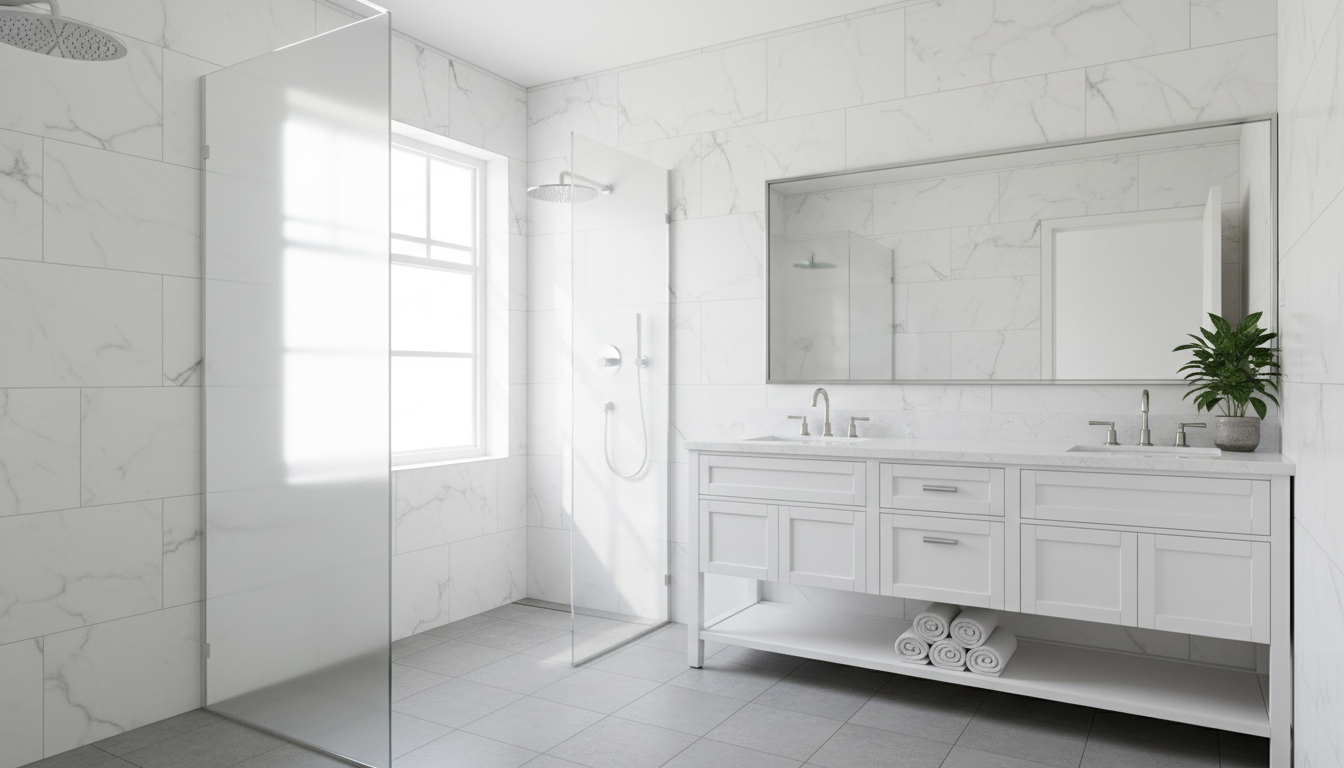
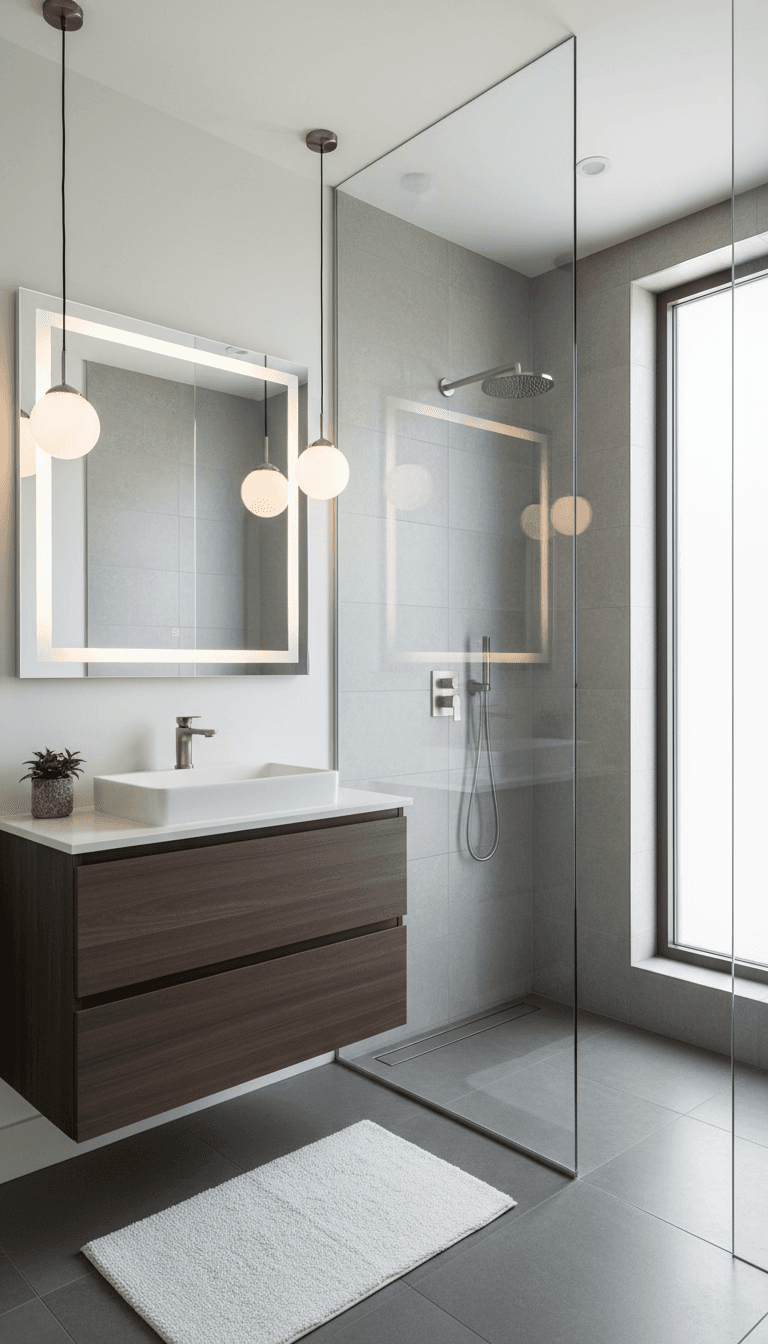
Investing in tile installation in Fort Worth should be a strategic decision centered on high-impact areas. While whole-home flooring provides a clean slate, the highest return on investment consistently comes from a tiled walk-in shower. In a bathroom remodel in Fort Worth, replacing a dated acrylic insert with floor-to-ceiling marble-look porcelain creates a high-end feel that buyers prioritize. We are currently seeing a shift toward these large-format tiles in Tarrant County because they minimize grout lines and maximize the perception of space.
For a kitchen renovation in Dallas, the backsplash acts as the visual anchor. Trends have moved toward textured subway tiles or hand-cut styles that add organic depth to modern cabinets. To keep these designs from feeling overwhelming, we recommend the Rule of 3. Limit your space to three main hard surfaces: the floor, the countertop, and the wall tile. This ensures visual harmony without clutter.
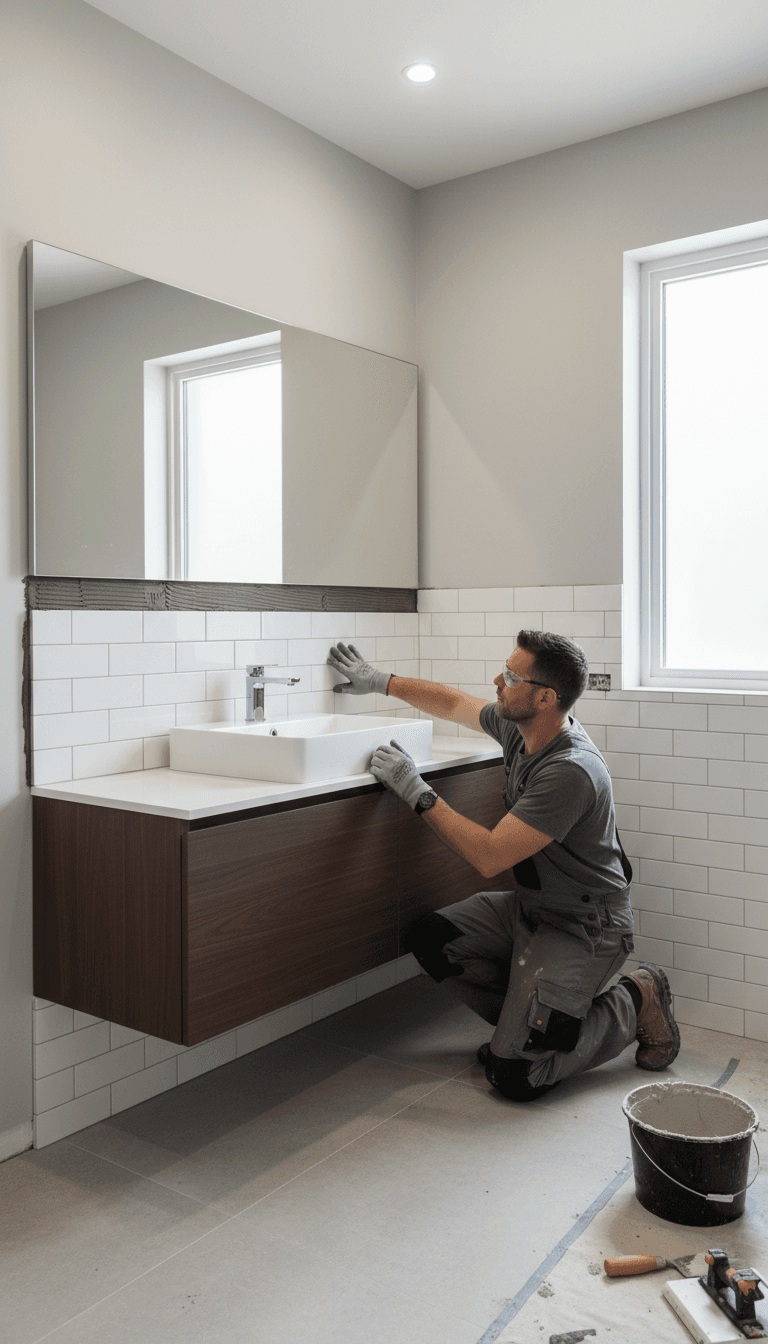
For investor-focused rental turns, the strategy shifts toward cost-effective appeal. A simple, clean white subway tile backsplash with a high-contrast grout can significantly boost rental listings without the price tag of a custom mosaic. Whether it is a luxury primary suite or a rental property update, focusing on these vertical surfaces offers the most noticeable visual upgrade per dollar spent.
Technical Precision: The 3 4 5 Rule and Layout Planning
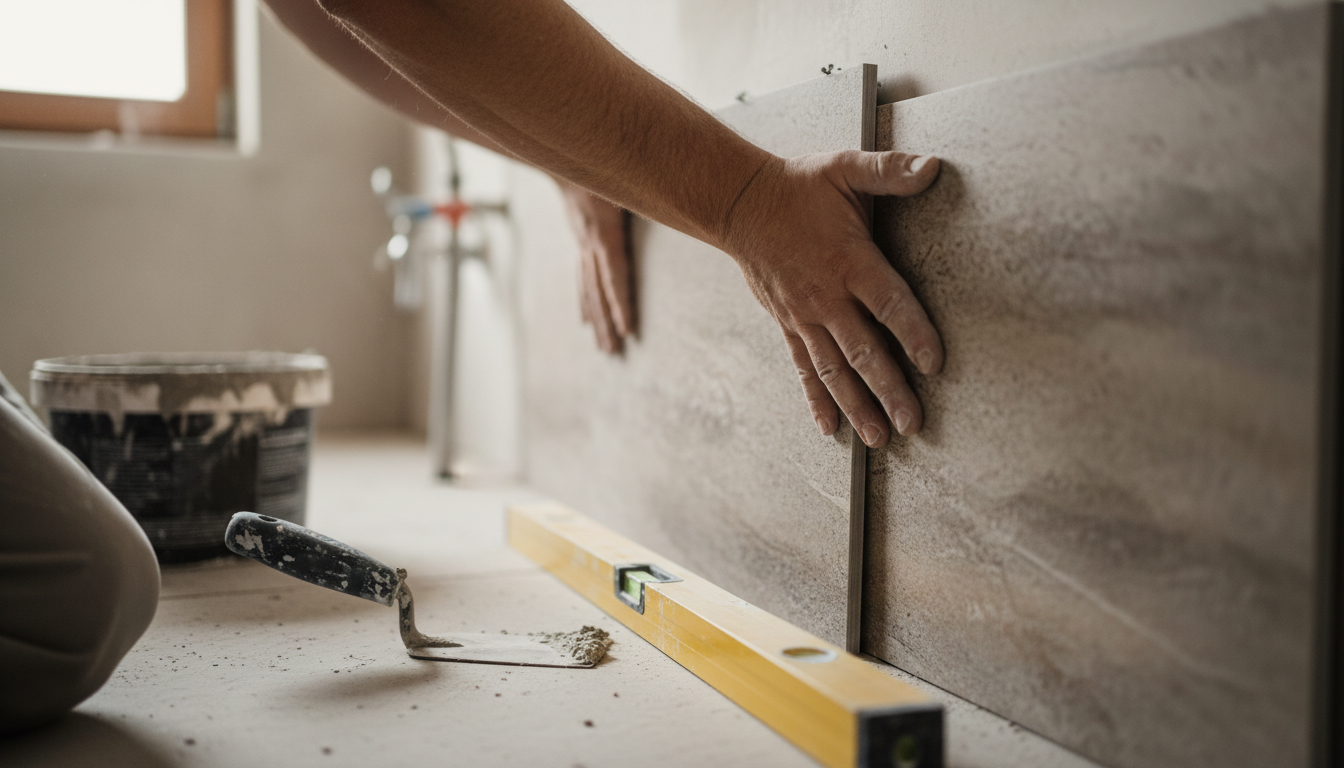
A flawless finish in a high ROI zone depends entirely on geometry. Most rooms in older Tarrant County homes or even new builds are rarely perfectly square, which is why our team relies on the 3 4 5 rule during the initial planning phase. By measuring three feet along one wall and four feet along the perpendicular wall, the diagonal measurement between those two points must be exactly five feet to confirm a true 90 degree angle. Establishing this square reference point at the start of a tile installation in Fort Worth prevents the entire layout from appearing crooked as it progresses across an open floor plan.
We take layout planning a step further by calculating the run of the tile before any mortar is mixed. A common amateur mistake is starting with a full tile against one wall, only to end up with awkward, fragile sliver cuts on the opposite side. We mathematically center the layout or prioritize the most visible focal point, ensuring that perimeter tiles are cut to a substantial, aesthetically pleasing size. This level of precision ensures your flooring installation in Fort Worth looks intentional and symmetrical rather than forced.
Maintenance and Longevity in the North Texas Climate
A perfect layout only stays perfect if the materials are maintained against the specific environmental pressures of Tarrant County. While porcelain is virtually indestructible, the grout remains the primary failure point in many North Texas homes. Standard cementitious grout is porous; the fine clay dust of a Fort Worth summer can settle in and permanently discolor the lines if they are not sealed annually. For a bathroom remodel in Fort Worth or a high-traffic kitchen renovation in Dallas, our team often recommends epoxy or high-performance premixed grouts. These options are non-porous and chemically resistant, effectively eliminating the need for periodic resealing and providing a much stronger defense against moisture.
Longevity in tile installation Fort Worth projects depends on how you treat these joints. If you choose traditional grout, apply a high-quality penetrating sealer forty-eight hours after installation and every twelve to eighteen months thereafter. For routine cleaning, avoid harsh acids that can eat away at the grout structure. A pH-neutral cleaner and a microfiber mop will preserve the finish of your flooring installation in Fort Worth far better than steam mops, which can occasionally force moisture deep into the substrate and weaken the bond over time.
Choosing the right tile for your Fort Worth home involves balancing aesthetics with the technical realities of Texas slab foundations. While understanding the costs and potential ROI is a great start, the actual installation requires careful planning to ensure long-term durability. If you want expert help navigating these complexities, our Full Service Renovation team is here to manage every detail for you. We help local homeowners turn their design visions into reality while handling all the structural nuances of North Texas construction.