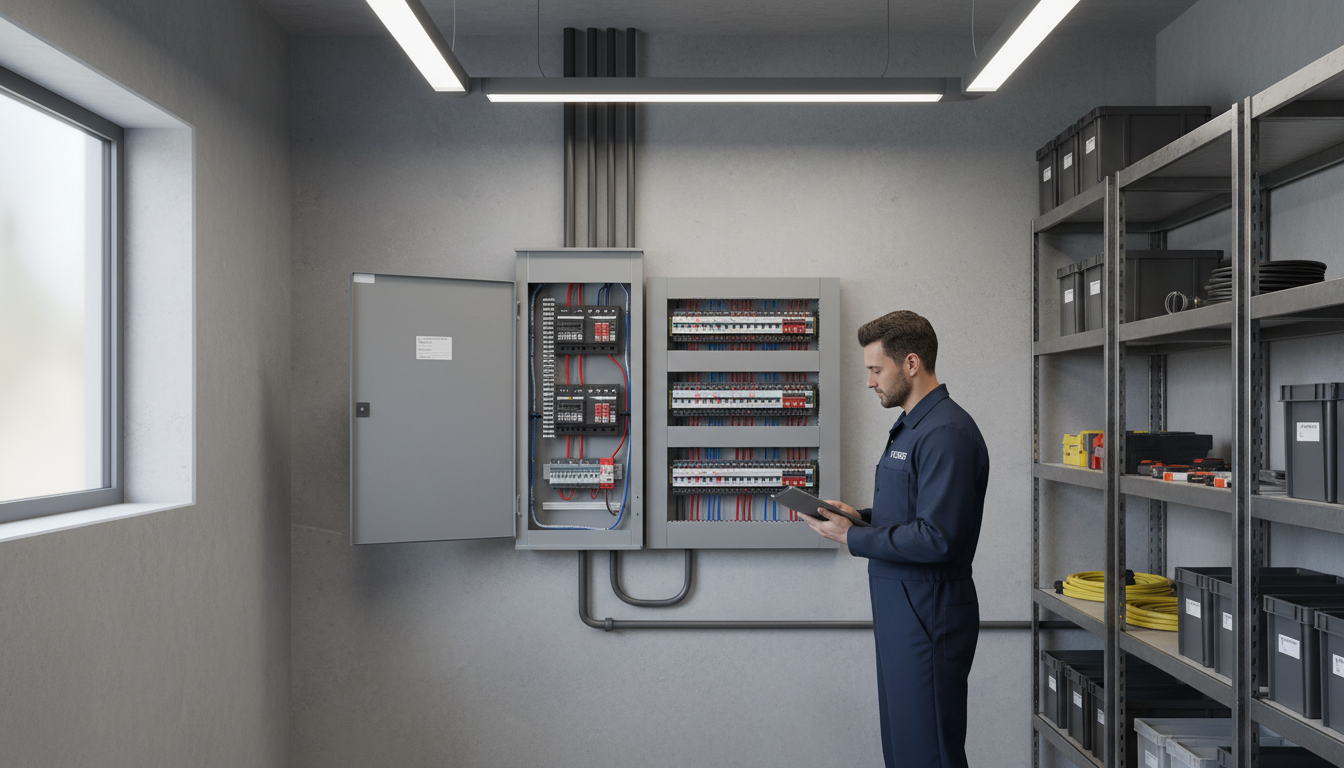
An electrical panel upgrade Fort Worth typically costs between $1,500 and $4,000 for standard residential service, though full system replacements can range up to $8,000. Homeowners should prioritize this project when increasing capacity to 200 amps or renovating older properties to ensure modern safety standards and reliable power distribution.
Imagine planning a sophisticated kitchen remodel in Fort Worth only to find your project stalled by a buzzing circuit breaker or a panel that lacks the capacity for modern appliances. For many homeowners in our local neighborhoods, an outdated electrical system is a hidden bottleneck that threatens both safety and the renovation timeline. At Bridge and Build Renovations, we believe that a successful transformation requires a robust foundation; that begins with your home's power center. In this guide, we break down the practicalities of upgrading your electrical service. You will learn about the current costs for 2024 and 2025, how to properly sequence electrical work within a larger remodel, and the specific Fort Worth code requirements that ensure your investment is both legal and secure. Planning for power now prevents expensive disruptions later.
Why Your Fort Worth Renovation Might Stall Before It Starts
Most homeowners start a full-home update dreaming of quartz countertops and walk-in showers. These features provide the visual impact, but the electrical panel is the silent engine that keeps the house running. In historic Fort Worth neighborhoods like Fairmount, Mistletoe Heights, or Arlington Heights, houses were built for a different era of power consumption. The original 100-amp service commonly found in these character-filled homes was designed to power a few lights and a radio, not a modern family's array of smart appliances, high-efficiency HVAC systems, and high-speed chargers.
When planning a kitchen renovation in Dallas or tackling investor rehabs in older DFW zip codes, the existing infrastructure often hits its limit the moment you add a double oven or a dedicated circuit for a luxury appliance. An electrical panel upgrade in Fort Worth is rarely a choice made for aesthetics; it is a technical prerequisite that ensures your new renovations operate safely and meet current building codes. Failing to account for this capacity early in the design phase is one of the primary reasons projects stall, leading to budget surprises and timeline shifts that could have been avoided with professional discovery before the first wall is opened.
Signs You Need an Electrical Panel Upgrade During a Remodel

Identifying the need for an electrical panel upgrade in Fort Worth starts with a load calculation rather than a visual inspection. Modern renovations often push a home’s demand beyond the standard 100-amp service found in older North Texas neighborhoods. If your project includes a high-efficiency 5-ton HVAC system to combat DFW summers, an induction cooktop for a kitchen renovation in Dallas, or a Level 2 EV charger in the garage, a 200-amp service upgrade becomes a technical necessity.
The industry standard follows the 80 percent rule. Electrical panels should never be loaded to more than 80 percent of their rated capacity for continuous use. If your planned additions, combined with existing appliances, exceed this threshold, the system risks overheating or frequent breaker trips. During investor rehabs or a full-home update, we often find that just adding modern laundry equipment and a dishwasher to a 100-amp panel triggers a mandatory swap to ensure the home meets current National Electrical Code (NEC) standards.
Beyond capacity, the brand of your equipment can be a non-negotiable trigger for replacement. Many Fort Worth homes built in the 1970s and 1980s were equipped with Federal Pacific Electric (FPE) or Zinsco panels. These specific brands are notorious for failing to trip during a short circuit or overcurrent, which creates a significant fire hazard. Most insurance carriers now refuse to cover homes with these panels or charge exorbitant premiums because of this known defect. If you see the name "Stab-Lok" on your breakers or a Zinsco logo inside the panel door, the unit is no longer a functional component; it is a liability that must be addressed before any other renovation work proceeds.
Electrical Panel Upgrade Cost in Fort Worth for 2024 and 2025

Understanding the financial investment for an electrical panel upgrade in Fort Worth requires distinguishing between a basic hardware replacement and a complete service overhaul. In the 2024 and 2025 DFW market, a straightforward panel swap typically ranges from $2,000 to $4,500. This scope involves replacing the interior breaker box while utilizing the existing exterior service entrance. It is a common solution for full-home update projects where the service capacity is sufficient but the existing panel is outdated or physically damaged.
Costs escalate when the renovation demands more power, such as moving from 100-amp to 200-amp service. A full service upgrade includes the panel, meter base, service mast, and a modernized grounding system. For these comprehensive projects, homeowners and professionals should budget between $5,000 and $8,000. This is frequently the case for investor rehabs in older Fort Worth neighborhoods where the entire electrical infrastructure needs a reset to meet modern standards.
Service Level | Estimated Cost Range (2024-2025) | Key Components Included |
|---|---|---|
Simple Panel Swap | $2,000 – $4,500 | New interior panel and breakers only |
Full Service Upgrade | $5,000 – $8,000 | Panel, meter base, mast, grounding, and 200A service |
Complex/Large Estate | $8,000+ | High-capacity panels, sub-panels, extensive rerouting |
Several factors influence these local price points. Labor remains the primary driver, as a licensed electrician must navigate the specific permitting requirements in Fort Worth or Dallas; these fees are non-negotiable for code compliance. Furthermore, the global price of copper significantly impacts the cost of service entrance conductors and internal bus bars. Breakers themselves have seen price volatility, especially AFCI and GFCI breakers which are now required by code for most residential circuits. Larger homes or multi-unit kitchen renovation in Dallas projects often require additional labor to reroute existing circuits into the new configuration, which can quickly push the total investment beyond the standard $5,000 baseline.
Why Sequence Matters: The Contractor Perspective on Timing
Successful investor rehabs and home remodels depend on a logical order of operations. At Bridge & Build Renovations, we treat the electrical evaluation as a primary step in the discovery phase, occurring well before the first dumpster arrives on site. Waiting until the walls are open to check your capacity is a gamble that rarely pays off in older North Texas homes.
Consider the nightmare scenario often faced by DIY-heavy projects or poorly managed teams. A kitchen renovation in Dallas reaches completion; the backsplash is grouted, the custom cabinets are installed, and the luxury double oven is ready for its first meal. However, the moment the appliance draws full power, the system fails because the existing service could not handle the load. To fix this, a contractor must rip out fresh drywall and disturb new finishes to perform an electrical panel upgrade in Fort Worth and run higher-gauge wiring. This mistake turns a celebration into a costly, redundant repair phase.
Our structured timeline places the electrical infrastructure at the front of the queue. A professional full-home update requires that load calculations are finalized during the design stage so that permits are pulled and the upgrade is completed while the home is still in studs. By prioritizing the engine of the home early, we eliminate the mid-project stalls that occur when contractors suddenly realize the power supply is insufficient. Coordination with the utility provider and local inspectors during this specific window keeps the project moving, ensuring that our reputation for dependability remains intact throughout the build.
Fort Worth Code Requirements and Permitting for Electrical Work
Navigating the bureaucracy of Fort Worth Development Services is where technical skill meets project management. For any electrical panel upgrade in Fort Worth, the city requires a permit pulled specifically by a licensed electrician. This is not a suggestion; it is a safety mandate that ensures the work adheres to the current National Electrical Code (NEC). For investor rehabs or a full-home update, skipping this step is a significant liability that can halt a project indefinitely during a future sale or insurance claim.
The most critical phase occurs after the installation but before the power comes back on. The City of Fort Worth must perform a cutoff and reconnect inspection. Once the inspector verifies the work, they send a release to Oncor, the local utility provider. Oncor will not reconnect the service drop or energize a new 200-amp meter until that city approval is officially logged. This is the stage where many contractors drop the ball by failing to coordinate the inspector's arrival or being absent when the city official shows up. We treat these inspection windows as non-negotiable milestones. A kitchen renovation in Dallas stays on schedule because we manage the communication between the city, the utility, and the job site, ensuring the power is back on without multi-day delays.
Budgeting for the Unexpected: Wiring and Secondary Panels
Opening a wall during an electrical panel upgrade in Fort Worth frequently reveals legacy issues that were hidden behind drywall for decades. For landlords executing fast-paced rental turns or homeowners starting a full-home update, these discoveries often include improper grounding, deteriorated insulation, or dangerous double-tapped breakers where two wires are forced into a single slot. These are not optional fixes; they are safety requirements that must be addressed to pass inspection.
Modern building codes also introduce mandatory costs that catch many off guard. Current National Electrical Code standards require Arc Fault Circuit Interrupter (AFCI) breakers for most living areas. While a standard breaker might cost ten dollars, an AFCI breaker can exceed fifty dollars. In a full panel swap, this requirement alone can add five hundred to one thousand dollars in material costs. Furthermore, if your project involves a new master suite or a garage conversion common in investor rehabs, you may need a sub-panel to handle the localized load. This adds labor and material for the sub-panel itself plus the heavy-gauge wire feed from the main service.
We recommend homeowners and developers maintain a 10 to 15 percent contingency fund specifically for the electrical scope. This buffer ensures that when an inspector identifies a non-compliant circuit or a hidden junction box, the timeline remains intact. Planning for these technical realities is what separates a managed renovation from a stalled one.