
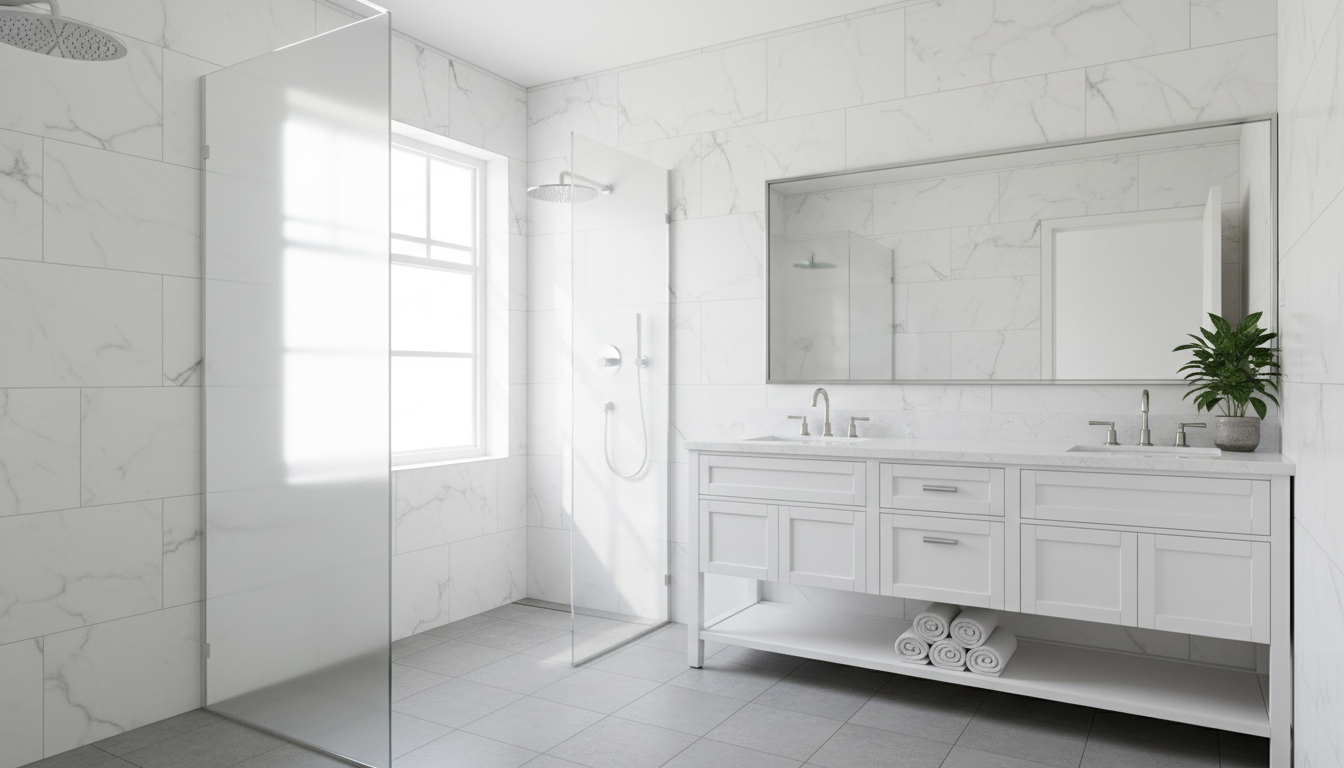
Proper bathroom ventilation Fort Worth remodel installations require a minimum of 50 CFM to effectively manage high North Texas humidity levels and prevent mold growth. Integrating a high-quality exhaust fan protects your renovation investment and ensures compliance with local residential building codes.
Walking into a freshly renovated bathroom only to find foggy mirrors and damp air is more than a minor annoyance; it is a sign that your investment is at risk. In Fort Worth, where North Texas humidity often clings to every surface, improper ventilation can quietly lead to peeling paint, warped cabinetry, and costly mold growth. At Bridge and Build Renovations, we believe that high-end design must be supported by superior engineering to ensure longevity. This guide explores why airflow is the most overlooked yet critical component of a successful local remodel. You will learn how to calculate the correct CFM for your specific square footage, avoid common mistakes found in older DFW homes, and integrate advanced moisture-sensing technology to protect your home for years to come.
The Most Overlooked Line Item in a Fort Worth Bathroom Renovation
When planning a bathroom remodel in Fort Worth, most homeowners spend hours debating custom tile patterns or floating vanity finishes. While these aesthetic choices define the visual impact of the space, the exhaust fan is the true unsung hero of the project. We view proper bathroom ventilation Fort Worth remodel planning as the ultimate insurance policy. It protects every other dollar you spend on high end materials and finish carpentry.
Bridge & Build Renovations operates on a philosophy of durable materials and efficient execution. This focus begins with proper airflow. In a construction market where basic professionalism, such as answering a phone or showing up as scheduled, is now marketed as a luxury feature, we believe that technical precision in the invisible parts of a home should be the standard. A high quality fan is not just a code requirement. It is a structural necessity that prevents your investment from degrading under the weight of North Texas humidity. By prioritizing airflow during the design phase, we ensure that your new master suite remains a functional retreat rather than a moisture trap. Choosing the right hardware and ensuring a dedicated exterior vent path is how we build for modern living.
The DFW Humidity Factor: Why North Texas Bathrooms Face Unique Risks

North Texas presents a specific set of atmospheric challenges that many builders ignore. In the Dallas-Fort Worth metroplex, summer humidity routinely exceeds 75 percent, staying elevated from late May through September. When the outdoor air is already saturated, a bathroom cannot rely on passive drying or a cracked window to recover from a hot shower. A typical steaming shower can spike relative humidity inside a small room above 90 percent. Without aggressive mechanical help, that moisture remains trapped for hours.
This lingering dampness is where structural degradation begins. When a bathroom stays wet, mold quickly colonizes grout lines and caulk joints. More concerning is the moisture that permeates through porous surfaces and gets trapped behind the tile assembly. Over time, this leads to drywall rot and compromises the integrity of the wall studs. A standard builder might focus only on the visual finish, but a bathroom remodel in Fort Worth must account for these environmental stressors to remain durable.
At Bridge & Build, we contrast a basic renovation with one built for modern living in Texas. We recognize that effective bathroom ventilation Fort Worth remodel planning is a defense against the local climate. While a standard build might meet the absolute minimum code, a professional project ensures the system can actually move air against the heavy, humid DFW baseline. This proactive approach prevents the musty smells and failing finishes that plague older homes in our area. Relying on the environment to dry out a space in Arlington or Keller is a losing battle; the physics of our region require a managed, mechanical solution.
Calculating CFM: How to Size a Bathroom Exhaust Fan for Texas Sized Homes

Sizing an exhaust fan is a matter of physics, not guesswork. The industry uses a metric called CFM, which stands for Cubic Feet per Minute. This number represents the volume of air the fan can move out of the room every sixty seconds. While national building codes offer a baseline, a bathroom remodel in Fort Worth requires a more nuanced approach to account for our local climate and the architecture of Texas homes.
The standard industry calculation is one CFM per square foot of floor space. However, we utilize a North Texas Multiplier when planning a bathroom ventilation Fort Worth remodel. For master suites in Keller or Southlake that feature ten-foot ceilings, jetted tubs, or oversized walk-in showers, we recommend aiming for 1.25 to 1.5 CFM per square foot. High ceilings increase the total volume of air in the room, and jetted tubs generate significantly more steam than a standard basin; both factors require more powerful equipment to clear the space effectively.
Room Dimensions | Square Footage | Standard CFM | North Texas Recommended CFM |
|---|---|---|---|
5' x 8' (Guest Bath) | 40 sq. ft. | 50 CFM | 80 CFM |
8' x 10' (Standard Bath) | 80 sq. ft. | 80 CFM | 110 CFM |
12' x 12' (Master Suite) | 144 sq. ft. | 150 CFM | 180 - 220 CFM |
We often hear homeowners ask if a 110 CFM fan is too much for a small bathroom. The answer is almost always no. Over-sizing a fan slightly does not create a wind tunnel; it simply exhausts moisture faster and more efficiently. This is especially useful in rental properties where tenants may not leave the fan running long enough after a shower.
It is also important to remember that a fan’s rated CFM is its performance under ideal laboratory conditions. In a real-world setting, factors like long duct runs and elbow joints create static pressure that reduces actual airflow. Factoring these variables into your initial bathroom renovation costs ensures that the hardware you install actually performs as advertised once the drywall is closed.
Preventing Peeling Paint and Mold: The Science of Steam Management
The primary reason bathroom ceiling paint fails is not usually a product defect; it is a mechanical failure of the room’s airflow. When steam rises and lingers against a ceiling, it condenses into water droplets that saturate the paint film. Over time, this moisture penetrates the surface and weakens the bond between the drywall and the primer. Even high quality interior painting in Fort Worth will eventually bubble, crack, and peel if the relative humidity remains above 90 percent for extended periods after a shower. Without a functional bathroom ventilation Fort Worth remodel strategy, you are essentially asking your paint to perform like a pool liner, a task it was never designed for.
Beyond the ceiling, poor steam management creates a playground for mold and mildew. Grout is inherently porous, and even the most expensive silicone caulk can trap microscopic debris that serves as food for mold when combined with standing moisture. Proper airflow acts as a continuous drying agent, pulling moisture out of these tight crevices before spores can colonize. In the Dallas-Fort Worth climate, where ambient humidity is already high, this mechanical drying is the difference between a bathroom remodel in Fort Worth that looks brand new for five years versus one that shows dark grout lines and orange mildew in six months.
Efficient ventilation ensures that the money you spend on designer tile and custom finish carpentry is protected from the slow, corrosive effects of trapped water vapor. This proactive approach to moisture control is a key factor we consider when calculating bathroom renovation costs, as the price of a high-capacity fan is negligible compared to the cost of remediating mold or repainting a ceiling every two years.
Common Ventilation Mistakes in Older North Texas Homes
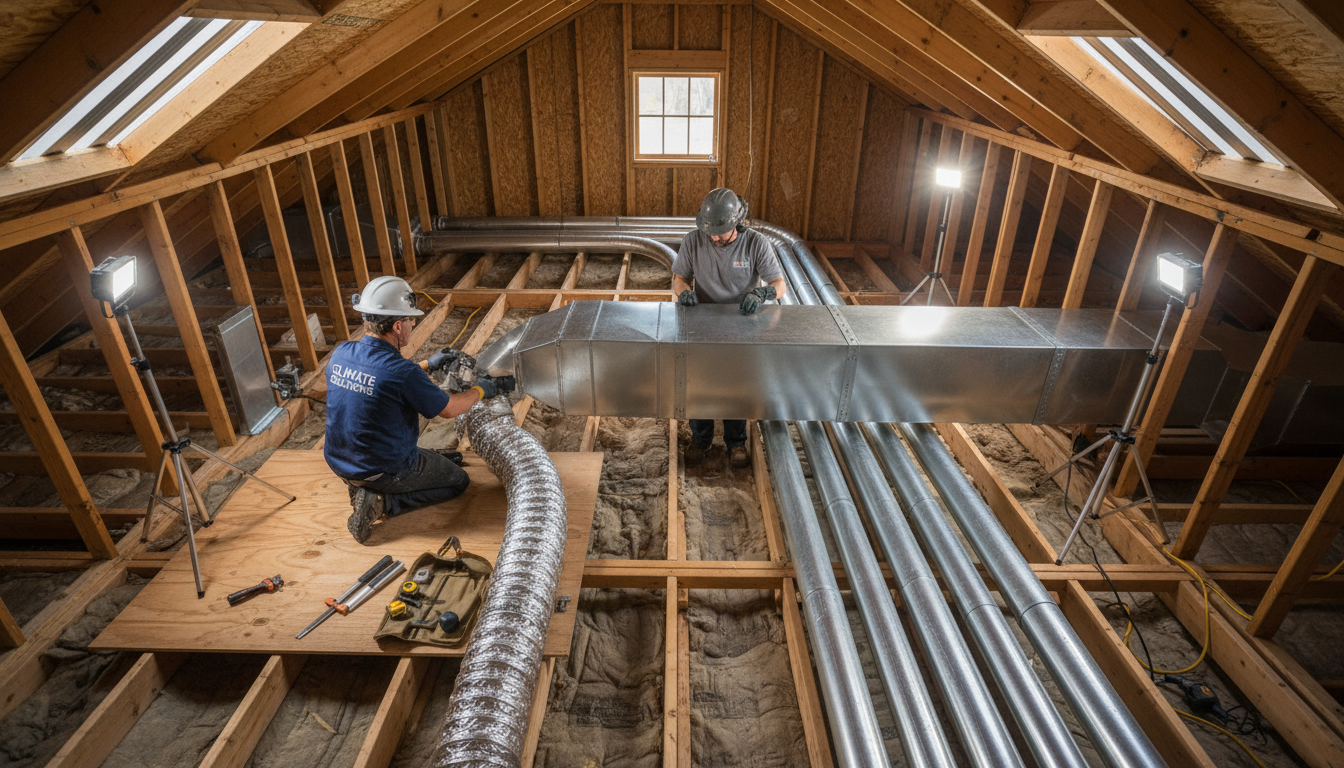
In many older homes across Arlington and Burleson, we frequently encounter the "attic dump" mistake. This occurs when a previous installer or builder vents the bathroom exhaust fan directly into the attic space rather than through the roof or a gable wall. While this may have been common practice in decades past, it is a recipe for disaster in our climate. By pumping gallons of moisture-laden air into an unconditioned attic, you are essentially creating a rainforest environment above your ceiling. This leads to condensation on the underside of the roof deck, eventually causing roof rot and mold colonization that remains hidden until the structural damage is severe.
The efficiency of your bathroom ventilation Fort Worth remodel also depends heavily on what happens between the fan and the exterior. Older installations often use flexible, "slinky" style ductwork. These corrugated tubes create significant internal friction, which can reduce the effective CFM of your fan by as much as 50 percent. To maintain the volume of air required for a durable renovation, we prioritize smooth, rigid metal ductwork with taped seams. This ensures the air moves quickly to the exit without being slowed down by the turbulent air currents created by flexible hoses.
Identifying these hidden mechanical failures requires more than just a surface level bathroom remodel in Fort Worth. It demands professional project management and a reliable contractor for investment property projects who actually climbs into the attic to verify the vent path. At Bridge & Build, we look for these systemic issues during the initial assessment and demolition phases. We ensure that we aren't just making a bathroom look pretty while the home’s structure degrades from within due to outdated venting shortcuts.
Modern Features: Humidity Sensors and Whisper Quiet Operation
The technical evolution of bathroom hardware has moved beyond the loud box in the ceiling. Modern upgrades offer functionality that standard contractor grade models lack, specifically regarding automation. Humidity sensing fans are a game changer for property longevity. These units automatically activate when moisture levels spike, which is a critical feature that any reliable contractor for investment property projects should recommend. In rental property turns or kids' bathrooms, you cannot always rely on occupants to remember the switch. A sensor ensures your bathroom ventilation Fort Worth remodel strategy works even when the users are forgetful, protecting your drywall and paint from steam damage.
Noise levels are measured in Sones. A standard, older fan often clocks in at 3.0 to 4.0 Sones, sounding like a small jet engine. In contrast, premium modern fans operate at 1.0 Sone or less, providing whisper quiet performance. This is a significant lifestyle upgrade for a master retreat; it allows for a peaceful morning routine without a disruptive mechanical hum.
Fan Grade | Noise Level (Sones) | Recommended Use Case |
|---|---|---|
Contractor Grade | 3.0 - 4.0 | Basic utility or garage baths |
Mid-Range | 1.5 - 2.0 | Guest bathrooms |
Premium Modern | 0.3 - 1.0 | Master suites and luxury remodels |
Aesthetics have also caught up to performance. Modern designer grilles are sleek and often integrate dimmable LED lighting. This allows the fan to disappear into the ceiling as a clean design element rather than an eyesore. Factoring these smart features into your bathroom renovation costs adds minimal expense relative to the long term protection and daily comfort they provide in a high end bathroom remodel in Fort Worth.
Rough In Planning: Integrating Ventilation into Your Project Timeline
Integrating high performance ventilation into your project timeline is not something that happens at the finish line. Successful bathroom ventilation Fort Worth remodel execution occurs during the rough in phase, the specific window when wall studs are exposed and the ceiling is open. This is the stage where our team installs the housing, runs rigid ductwork to the exterior, and ensures the electrical circuit can handle the load.
Our streamlined renovation process treats mechanical systems with the same urgency as aesthetic choices. Waiting until the drywall is hung to decide on a fan upgrade is a logistical mistake that inflates bathroom renovation costs. Changing a unit after the ceiling is closed requires invasive cutting, patching, and repainting; it often means compromising on duct placement because the framing is no longer accessible. By coordinating this early, we marry investor level efficiency with homeowner craftsmanship. As a reliable contractor for investment property projects, we know that getting the mechanical rough in right is the only way to deliver a bathroom remodel in Fort Worth that stays dry and durable for the long haul.
Proper ventilation is essential for any Fort Worth bathroom to fight humidity and protect your investment. By choosing the right fan and ensuring correct installation, you can avoid mold and moisture damage. If you find the technical aspects of planning your layout or selecting hardware overwhelming, Bridge & Build Renovations is here to guide you. We understand the specific challenges of the local climate; therefore, if you want expert help designing a space that stays beautiful for years, our Fort Worth Bathroom Remodeling services provide the professional oversight needed for a lasting result.