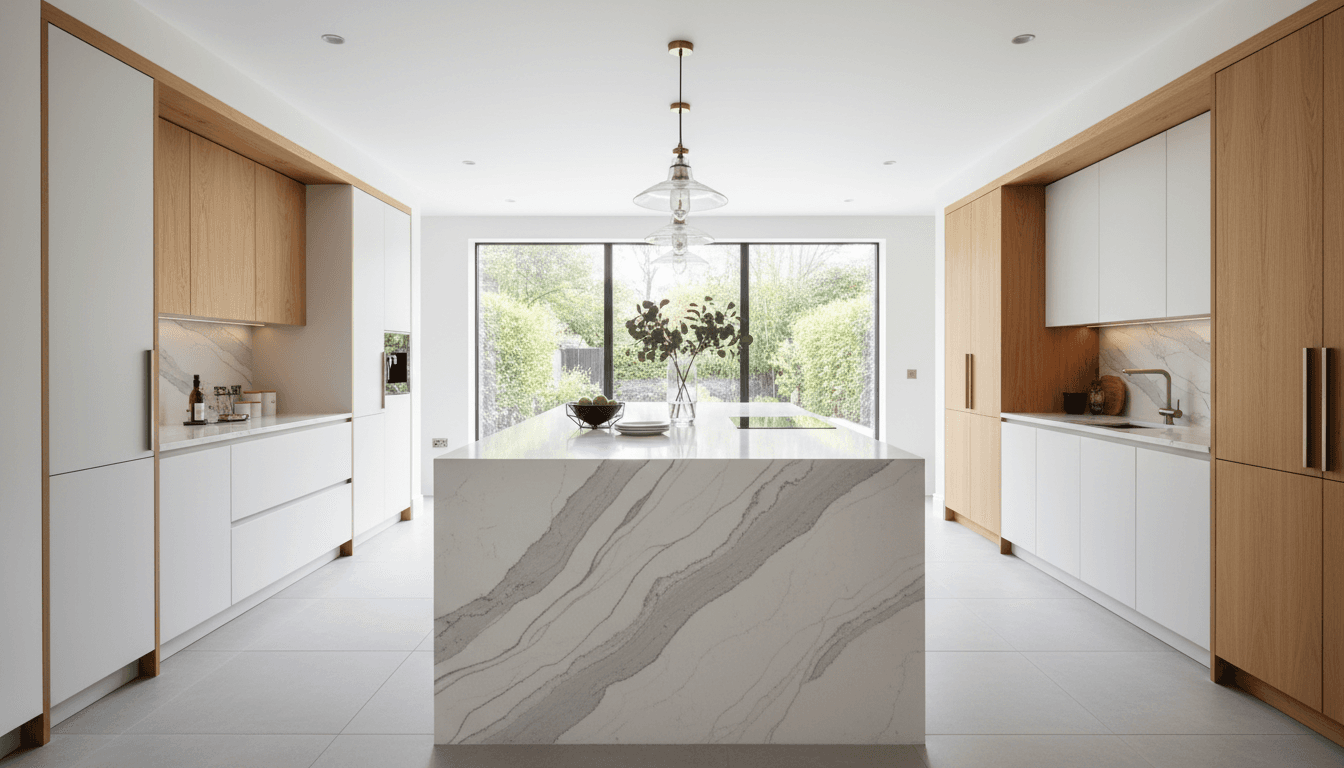
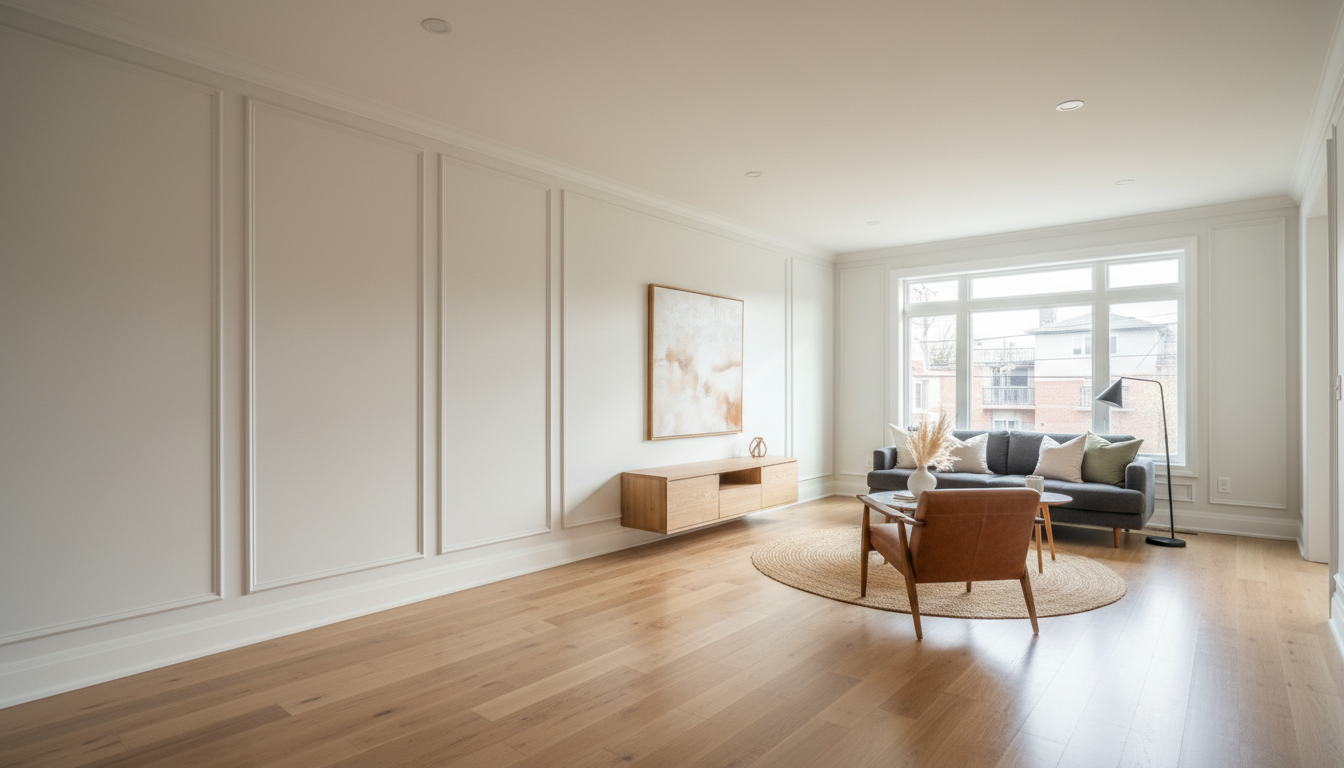
Focus on cosmetic kitchen refreshes, durable luxury vinyl plank flooring, and modern bathroom updates to maximize the impact of rental property renovations Fort Worth. These high-ROI improvements, alongside energy-efficient HVAC systems, significantly increase property value and monthly rent by appealing to 2026 tenant expectations. Strategic upgrades can yield up to a 95 percent return on investment while simultaneously reducing long-term maintenance costs.
You bought a rental property in Fort Worth to generate income, not to pour money into renovations that never come back. But leaving units untouched between tenants, or worse, upgrading the wrong things, is quietly costing you rent revenue, longer vacancies, and declining property value in a market that keeps moving forward. Fort Worth renters in 2026 have real expectations, and landlords who understand which improvements actually drive higher rents and faster leases will consistently outperform those who guess. In this guide, you will learn the specific renovations that deliver measurable returns in the Fort Worth rental market, the upgrades tenants are willing to pay more for, and how to approach a rental turn or rehab without over-spending on finishes that do not move the needle.
TL;DR: The Renovations That Move the Needle in Fort Worth Rentals
New apartment inventory across DFW is raising the bar for what tenants expect, even in single-family rentals. Not every upgrade earns its cost back. Here are the renovations that actually move the needle for Fort Worth landlords in 2026:
LVP flooring replaces worn carpet at $3–5 per sq ft installed and helps units rent 15–20% faster, with durability that holds up across multiple tenant cycles
Interior paint with neutral palettes is the lowest-cost, highest-visibility upgrade available and directly impacts how quickly a listing converts
Cosmetic kitchen refreshes (cabinet refinishing, updated hardware, new lighting) at $3,000–8,000 consistently outperform full gut remodels on rental ROI
Bathroom updates scaled to property class, from re-caulking and new fixtures in C-class units to full-height tile and semi-frameless glass in B and A-class rentals, reduce vacancy and justify rent increases
In-unit laundry hookups at $800–1,500 can add $75–150 to monthly rent and are increasingly expected by tenants above $1,400/month in DFW
Functional systems first: HVAC, plumbing, and electrical upgrades protect tenant retention and should precede any cosmetic spend
The rest of this article breaks down exactly which upgrades pencil out by property class, where Fort Worth landlords most often over-improve, and how to use the 1% Rule to keep renovation spend disciplined.
Why Fort Worth Landlords Need a Smarter Renovation Strategy in 2026
New apartment complexes along Alliance Corridor, Near Southside, and Haltom City are not just adding inventory to the DFW market; they are actively resetting what tenants expect from any rental, including older single-family homes in Wedgwood, Eastside, and Saginaw. Granite-look counters, in-unit laundry, and modern finishes come standard in these new builds, and tenants comparison-shop accordingly. Fresh paint and carpet replacement, the traditional landlord turnover formula, no longer justify a rent increase in most Fort Worth submarkets.
DFW added over 120,000 residents in 2024, which sustains strong rental demand, but that same growth is driving significant new apartment supply. More heads in beds does not automatically mean easier leasing if your unit looks dated next to newer competition. The landlords winning on rent growth right now are the ones renovating with discipline, not enthusiasm.
That discipline starts with a simple benchmark: the 1% Rule for renovation spend. For every $5,000 invested in rental property renovations in Fort Worth, the upgrade should generate at least $50 in additional monthly rent. Spend $10,000, target $100 more per month. Anything that does not clear that threshold needs a hard look before it makes the scope. The goal is not the nicest unit on the block; it is the best-returning unit relative to what the neighborhood rent ceiling will actually support.
The Fort Worth Rental Renovation Hierarchy: Fix Before You Upgrade
Strategic renovation spend only works when the foundation underneath it is solid. Before any landlord in Fort Worth starts pricing out quartz countertops or LVP flooring, there is a prior tier of work that determines whether those cosmetic upgrades ever deliver their expected return.
Functional systems are not glamorous, but they are the reason tenants stay or leave. In DFW, HVAC is the clearest example. A unit that struggles through a 105-degree August will generate maintenance calls, lease non-renewals, and reviews that follow the property for years. Upgrading to a high-efficiency system rated SEER 16 or above returns 70–100% on investment and gives landlords a legitimate, tangible reason to raise rent. Lower utility costs are a real selling point to tenants who have just spent a summer watching their electric bills climb. Beyond HVAC, the same logic applies to plumbing basics (supply line age, water heater condition, shutoff valve function), electrical safety (panel capacity, GFCI protection in wet areas), and weatherproofing (door seals, attic insulation, window condition).
The common landlord mistake is skipping this tier entirely and going straight to aesthetics. New cabinet hardware and a fresh backsplash photograph well, but they do nothing when the AC fails in July or a supply line leaks behind the wall. Tenant retention collapses when systems disappoint, regardless of how good the kitchen looks.
For C-class rental properties specifically, this functional tier should consume nearly the entire renovation budget. Tenants renting in the $900–$1,100 range in Fort Worth prioritize reliability over finishes. A clean, well-maintained unit with dependable systems will outperform a cosmetically upgraded unit with deferred mechanical issues every time.
Bridge and Build handles both the functional and finish sides of rental property renovations in Fort Worth, which means landlords are not managing a separate HVAC contractor, plumber, and remodeling crew across a single turnover. Keeping that scope under one roof keeps timelines tighter and prevents the coordination gaps where vacancy days quietly accumulate.
LVP Flooring and Interior Paint: The Highest-Return Cosmetic Upgrades

Once functional systems are addressed, two cosmetic upgrades consistently outperform everything else on the return side: LVP flooring and interior paint. They work across every property class, they move the needle on days-to-lease, and they do not require a gut remodel to execute.
LVP installs at $3–5 per sq ft in the Fort Worth market, which puts a full 1,200 sq ft rental in the $3,600–6,000 range depending on layout complexity and subfloor condition. The durability advantage over carpet is significant for landlords operating pet-friendly units, which represent a substantial portion of the Fort Worth rental pool. Carpet absorbs odor, shows wear within one or two tenant cycles, and photographs poorly in listings. LVP holds up across multiple turns, cleans between tenants in hours rather than days, and resists the pet and moisture damage that triggers carpet replacement costs. Properties with updated LVP flooring rent 15–20% faster than comparable units with worn carpet. In higher-demand submarkets like North Fort Worth, Keller, and areas near the Near Southside, that velocity gap translates directly into fewer vacancy days and stronger applicant pools.
Interior paint is the lowest-cost, highest-visibility upgrade on any turnover scope. Neutral palettes, warm whites and greige tones rather than builder beige, photograph well for online listings, appeal broadly across demographics, and reduce touch-up costs between tenants because they are easy to match. A full interior repaint combined with LVP on a 1,200 sq ft Fort Worth rental typically runs $4,000–7,000 total and justifies a $75–125 monthly rent increase, clearing the 1% Rule with room to spare.
For landlords who want the kitchen to match the updated floors and fresh walls without committing to full cabinet replacement, cabinet refinishing closes that gap cleanly. It delivers a near-new appearance at a fraction of replacement cost and keeps the overall renovation scope in the range where rental ROI holds up.
Kitchen Updates That Justify Higher Rent Without a Full Gut Remodel
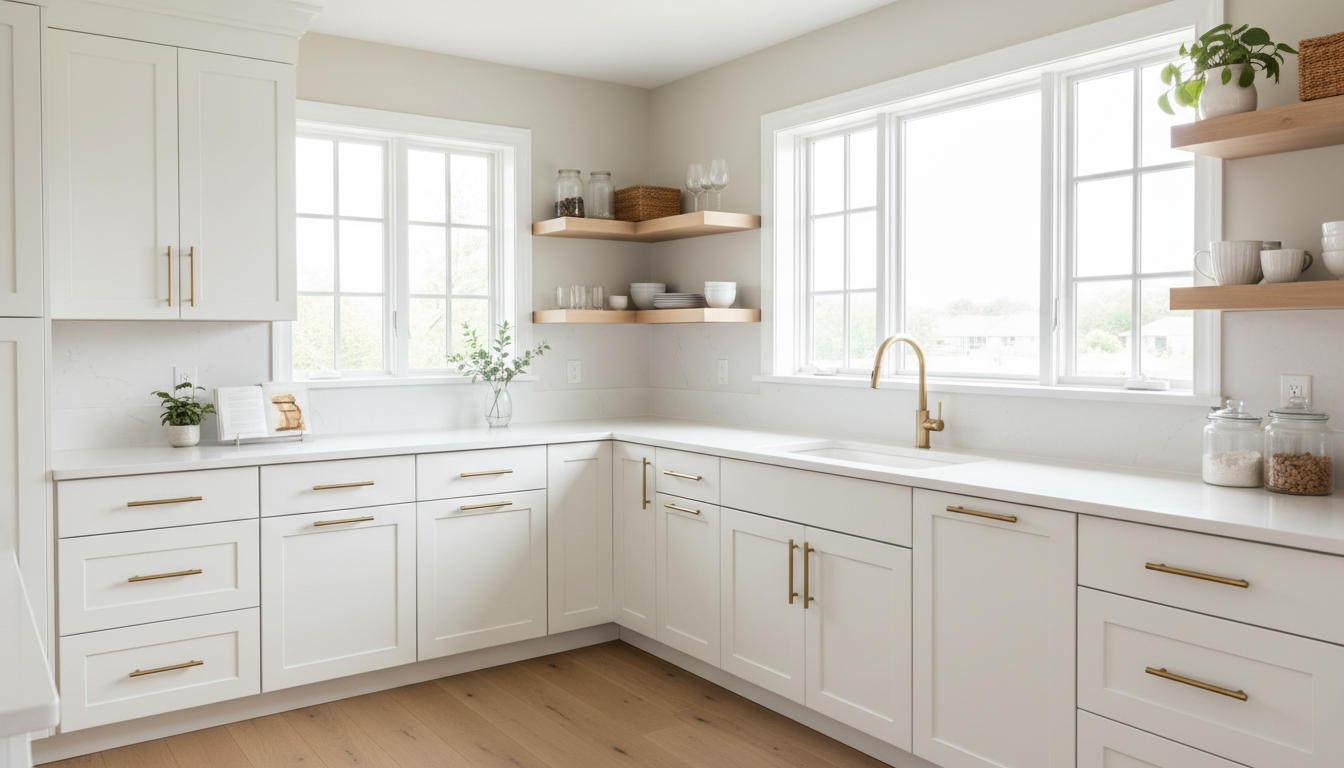
Cabinet refinishing does most of the heavy lifting in a rental kitchen refresh, which is why it sits at the center of what Bridge and Build recommends for investor clients. Updated floors and fresh paint set the tone, but the kitchen is where tenants decide whether a unit justifies the asking rent.
The relevant comparison for landlords is not between a new kitchen and an old one. It is between a cosmetic refresh and a full gut remodel. A full gut remodel in Fort Worth runs $30,000 or more. A targeted cosmetic refresh, covering cabinet refinishing, new hardware, updated lighting, an LVP or tile backsplash, and a new faucet and sink, typically lands between $3,000 and $8,000. On a rental property, the minor scope almost always wins on ROI, and the data supports that framing. National figures show a minor kitchen remodel in the $28,000–30,000 range delivers roughly 113% ROI. For rental property renovations in Fort Worth, the math gets tighter and more useful: spend $5,000–10,000 on a focused kitchen refresh and the realistic target is $100–150 in additional monthly rent, which clears the 1% Rule cleanly.
For mid-tier B-class rentals, quartz or butcher block countertops paired with cabinet refinishing and a modern light fixture package photograph sharply and signal quality without the cost of custom cabinetry. The combination reads updated to tenants who are comparing your listing against newer inventory.
The one firm caution here applies to C-class properties. Spending $10,000 on a kitchen in a submarket where rents cap at $1,100–$1,200 per month will not move that ceiling. The rent comp analysis comes before the renovation scope, not after.
Bathroom Refreshes: What Tenants Notice and What Actually Holds Up
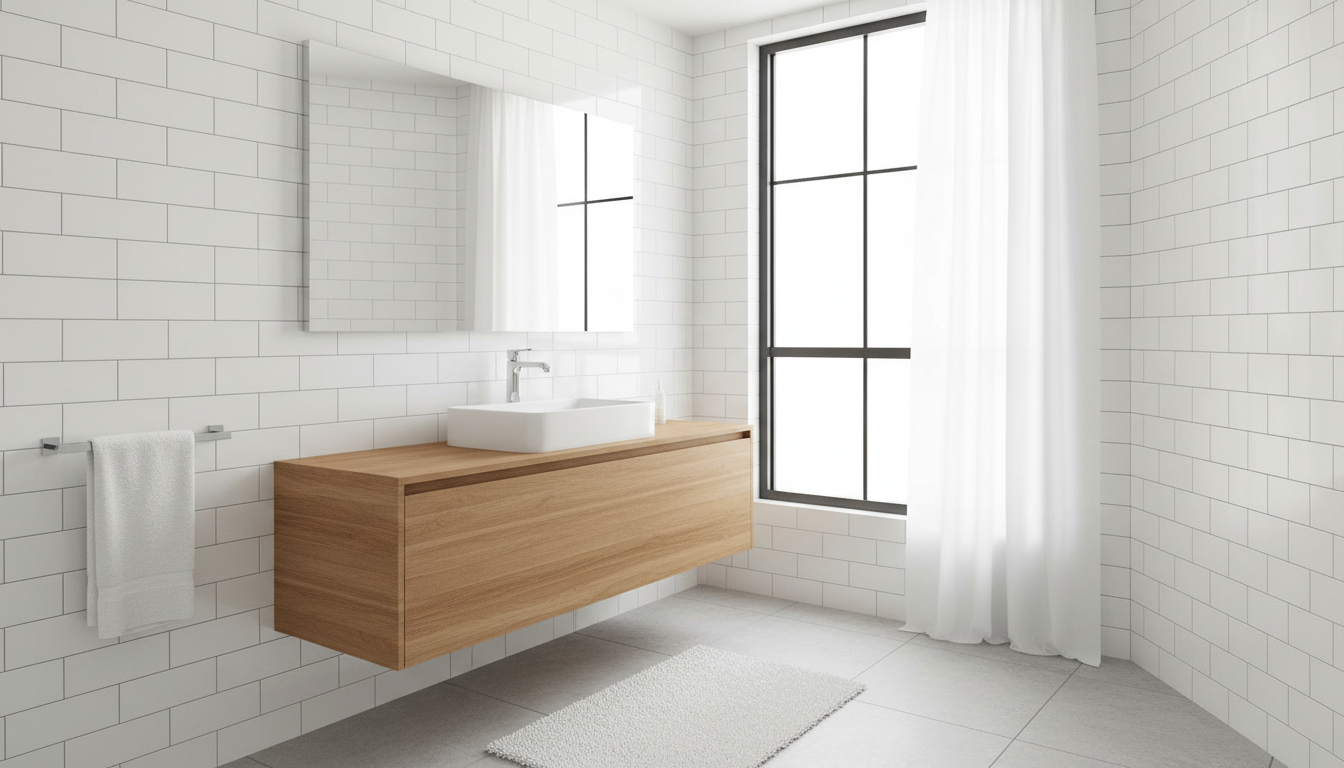
The same logic that governs kitchen spend applies directly to bathrooms: the upgrade scope should match what tenants in that rent band are actually comparing your unit against. Getting that calibration wrong is where landlords either under-invest in a B-class property that could command stronger rent, or over-build a bathroom in a submarket that will never return the cost.
For Fort Worth rentals in the $1,400–$2,000 per month range, which includes submarkets like Keller, Southlake, and North Fort Worth, bathroom finishes are a genuine leasing factor. Tenants at this price point are cross-shopping against newer apartment inventory with spa-adjacent aesthetics. Full-height shower tile, semi-frameless or frameless glass enclosures, floating vanities, and coordinated fixture packages signal that a property has been maintained and updated deliberately. These finishes also reduce maintenance calls over time; quality tile work and properly sealed enclosures outlast prefab surrounds across multiple tenant cycles. Bridge and Build's bathroom remodeling in Fort Worth work for investor clients focuses on durable tile selections, semi-frameless enclosures that photograph well without the custom glass price tag, and finish packages that read cohesive rather than assembled from separate contractor visits.
For C-class rentals in the $900–$1,200 range, the standard shifts entirely. Tenants here prioritize clean and functional. Fresh caulk, a new faucet, updated vanity lighting, and a clean vanity surface accomplish more for tenant satisfaction and vacancy reduction than any premium tile installation would. Spend the difference on functional systems or flooring instead.
In-Unit Laundry and Smart Home Features: Small Spend, Big Tenant Appeal
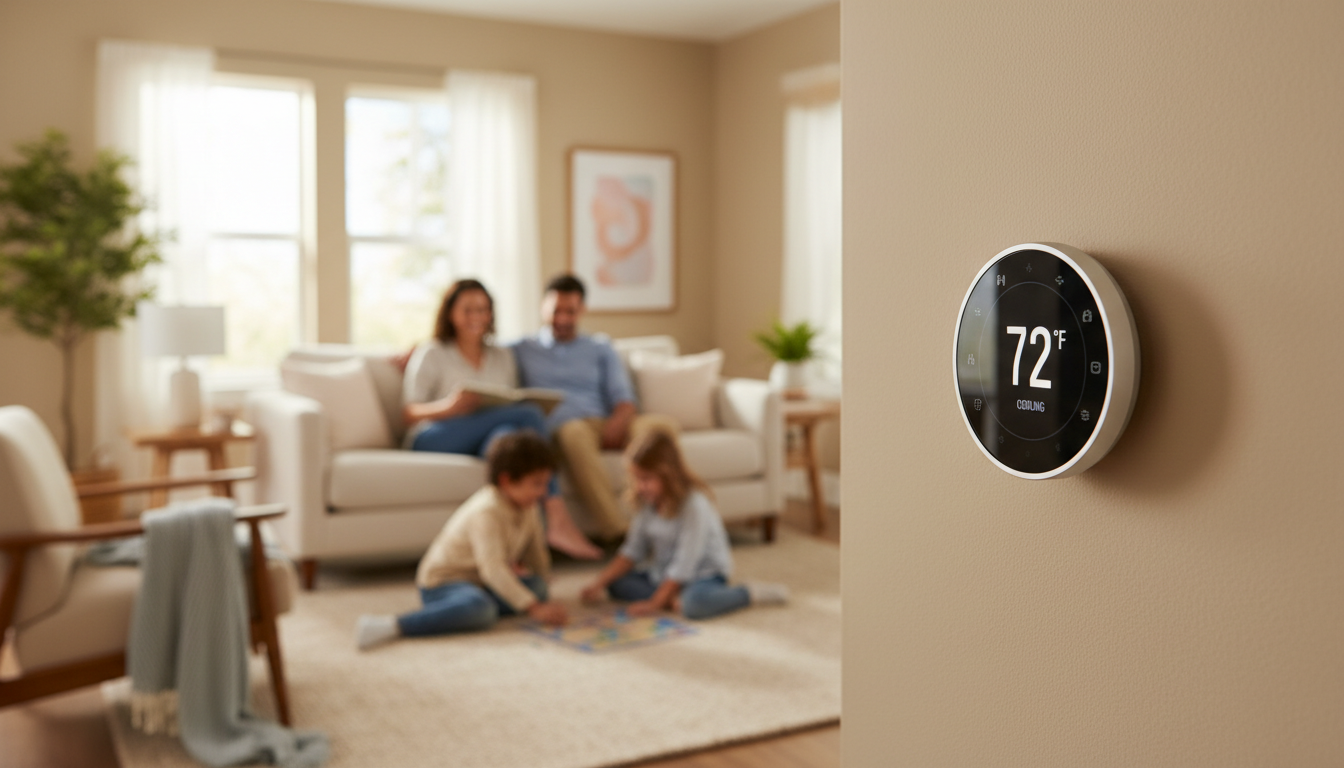
Bathroom finishes signal quality; laundry and smart home features close the deal. These upgrades function as multipliers because they influence both leasing velocity and tenant retention without requiring a significant renovation scope.
In-unit laundry is the clearest example. Adding washer and dryer hookups to a Fort Worth rental that currently lacks them runs $800–1,500 in most cases and supports a $75–150 monthly rent increase, which clears the 1% Rule on its own. For rentals priced above $1,400 per month in DFW, a full stacked unit installation ($1,500–3,000 including the appliances) has shifted from a differentiator to a baseline expectation. Tenants at that price point are comparing your listing against apartment inventory where in-unit laundry is standard, and the absence of it narrows your applicant pool measurably.
Smart locks and thermostats work differently but deliver compounding value. A smart lock at $150–300 per unit eliminates rekeying costs of $100–150 per tenant turnover and removes a recurring coordination hassle from every transition. A Nest or Ecobee thermostat at $150–250 installed addresses something Fort Worth tenants think about seriously: summer utility bills in Texas. That tangible benefit supports a modest rent increase and tends to appear in listing descriptions in a way that generic updates do not.
Bridge and Build bundles these installs into turnover packages so landlords are not scheduling a separate electrician, plumber, and handyman across a single vacancy window. The time saved matters as much as the cost.
How to Avoid Over-Improving Your Fort Worth Rental Property
The upgrades covered above all deliver real returns when applied to the right property in the right submarket. The risk is not in any single upgrade; it is in stacking too many of them onto a property that cannot absorb the cost through rent or resale.
The 30% rule provides the guardrail: total renovation spend should not exceed 30% of the property's after-repair value. On a Fort Worth rental valued at $180,000, that ceiling is $54,000. Spend beyond that threshold and the math on returns starts working against you, regardless of how well the work is executed. The neighborhood rent ceiling compounds this constraint. If comparable rentals in a given ZIP code consistently lease at $1,500–$1,600 per month, no finish package will push your unit to $2,100. The market simply does not support it, and the delta between what you spent and what the market returns becomes a permanent loss on the ledger.
The specific trap in Fort Worth looks like this: marble tile, custom cabinetry, or designer fixture packages installed in an Eastside rental where the rent ceiling sits at $1,200 per month. Those finishes belong in Southlake or North Fort Worth, where tenants at $1,800–$2,200 per month are actively comparing properties against new construction. Mismatching finish level to submarket is where rental property renovations in Fort Worth go wrong most often, and it is almost always avoidable.
Get a current rent comp analysis before the renovation scope is finalized. Bridge and Build works with investors to map realistic upgrade scopes against actual neighborhood rent data, so the budget decisions are grounded in what the market will return rather than what looks good on a mood board.
What to Expect When You Hire Bridge and Build for a Rental Turn or Rehab
Knowing which upgrades pencil out is half the equation; finding a contractor who can execute them without adding vacancy days is the other half. Bridge and Build works specifically with investors, landlords, and property managers across Fort Worth, Arlington, Burleson, Benbrook, Keller, and surrounding DFW communities. Every rental turn and rehab runs on a structured timeline with daily updates, so landlords are not left guessing where the project stands or chasing someone down for a status call. Flooring, paint, tile, plumbing, electrical, and cabinet refinishing are all handled under one scope, which eliminates the coordination gaps that quietly stretch vacancy windows when multiple contractors are involved.
For repeat investor clients and property managers running recurring projects, that consistency matters as much as the quality of the finish work. Our renovation services for investors and landlords cover everything from fast cosmetic turns to full rehabs, and the process is the same either way: clear scope, defined timeline, and communication that does not require a follow-up to get a straight answer. If you have a rental property in the DFW area and want to map a renovation scope against realistic rent outcomes before committing to a budget, get in touch with our team.
Successful rental property renovations in Fort Worth come down to selecting high-impact upgrades that resonate with modern tenants. By focusing on updated kitchens and energy-efficient features, you can significantly boost both rent and long-term property value. While planning is a great start, execution is where the real value is created. If you want expert help bringing your vision to life, you can read more about our commitment to high-quality craftsmanship. We focus on delivering results that help your investment succeed; ensuring your property remains competitive in the evolving Texas market.