

A standard bathroom remodel timeline Fort Worth often extends beyond the initial estimate due to poor planning, material backorders, and permit delays. We prevent these common setbacks by coordinating every phase of the project and securing all materials before construction begins to ensure a seamless renovation.
You budgeted three weeks for your bathroom remodel, and now you're six weeks in, sharing one bathroom with your entire household, and your contractor keeps pushing the finish date back with vague explanations. If that sounds familiar, you're not alone. In Fort Worth, bathroom remodel timelines slip constantly, and most homeowners don't realize why until they're already stuck in the middle of it. The causes are more predictable than contractors let on, and the fixes start before a single tile gets pulled. In this guide, you'll learn exactly how long a bathroom remodel should take, what actually causes delays, and how to protect your schedule from the moment you sign a contract.
How Long Should a Bathroom Remodel Actually Take in Fort Worth?
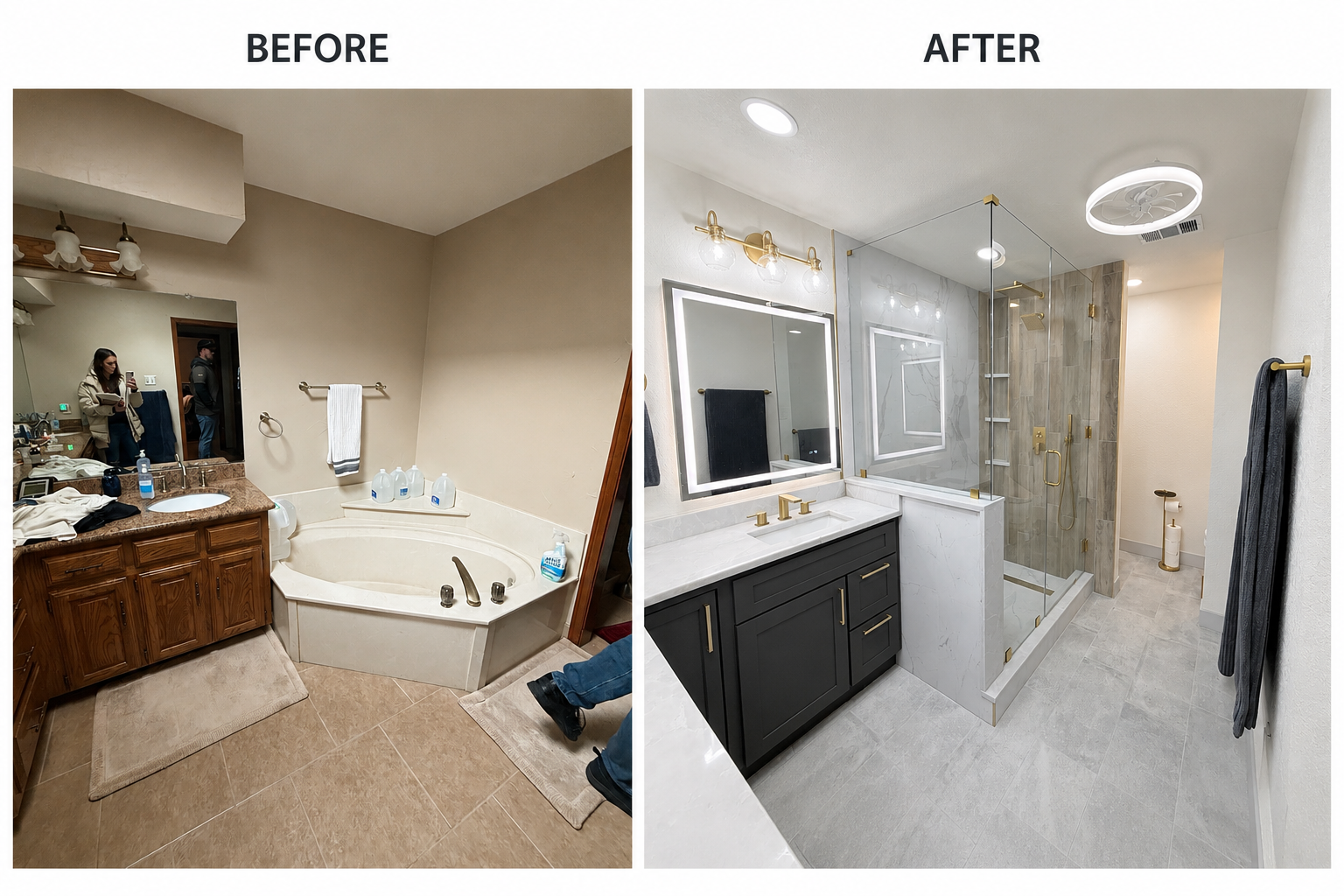
A standard mid-range bathroom remodel in Fort Worth takes 2 to 4 weeks from demo to final walkthrough. A full gut renovation involving plumbing relocation, full-height shower tile, a frameless glass enclosure, and custom vanity work runs closer to 4 to 6 weeks, sometimes longer when permit scheduling is factored in.
The distinction matters. A cosmetic refresh, swapping flooring, replacing a vanity, updating fixtures, and repainting, moves fast because you're not touching supply lines, drain locations, or the structural shell of the shower. A structural overhaul opens walls, moves plumbing, requires a rough-in inspection, and introduces a sequencing dependency where each trade has to finish before the next one can start. Those two scopes are not the same project, and they should not carry the same timeline.
The DFW market adds specific pressure that generic contractor timelines ignore. Contractor demand across Fort Worth, Keller, and surrounding communities stays high year-round, and summer heat genuinely affects crew scheduling and productivity on jobs with exterior access or poorly ventilated spaces. Permit timelines through Fort Worth's Development Services department vary, and inspections don't happen on demand. Building a realistic bathroom remodel timeline in Fort Worth means accounting for those local realities before the first tile is ordered.
The Real Reasons Bathroom Remodels Run Over Schedule
Knowing the rough timeline is useful. Understanding why projects blow past it is more useful. Most bathroom remodel delays don't come from bad luck. They come from skipped steps at the front end of the project.
Design decisions not finalized before demo starts. This one creates a chain reaction. The demo crew opens the walls, and suddenly the homeowner wants to shift the shower drain 18 inches. That single change triggers a revised plumbing rough-in, a new permit amendment, a reorder on the tile layout, and potentially a different glass enclosure configuration. What looked like a preference becomes a two-week setback. Decisions about tile, fixtures, vanity dimensions, and plumbing locations need to be locked before anyone picks up a pry bar.
Material lead times on specialty items. A standard tile from a local supplier might be in stock. Full-height large-format porcelain, a frameless glass enclosure with custom dimensions, or a furniture-style vanity from a design house is a different situation entirely. Lead times on those items commonly run three to six weeks. If a contractor orders them after demo starts, the project sits idle waiting for materials that should have been confirmed before the first day of work.
Permit and inspection scheduling in Fort Worth. The City of Fort Worth's Development Services department does not do same-day inspections on demand. Rough-in inspections for plumbing and electrical need to be scheduled, and getting on the calendar takes planning. A contractor who pulls the permit mid-project or fails a rough-in inspection can lose four to seven days before work legally continues.
Subcontractor juggling. A contractor managing four simultaneous jobs with one plumber and one tile crew will always have a job that gets deprioritized. It usually won't be announced. The crew just doesn't show up that morning.
Hidden conditions behind the walls. Older homes in Benbrook, Aledo, Fairmount, and established Fort Worth neighborhoods regularly turn up galvanized supply lines, failed mortar bed shower pans, or moisture damage that has been sitting behind tile for years. These aren't entirely avoidable, but a contractor who builds buffer time into the schedule and communicates immediately when something is found handles them without derailing the entire project.
Most of these delays are predictable. That's the part the industry doesn't say loudly enough.
A Week-by-Week Bathroom Remodel Timeline: What to Expect
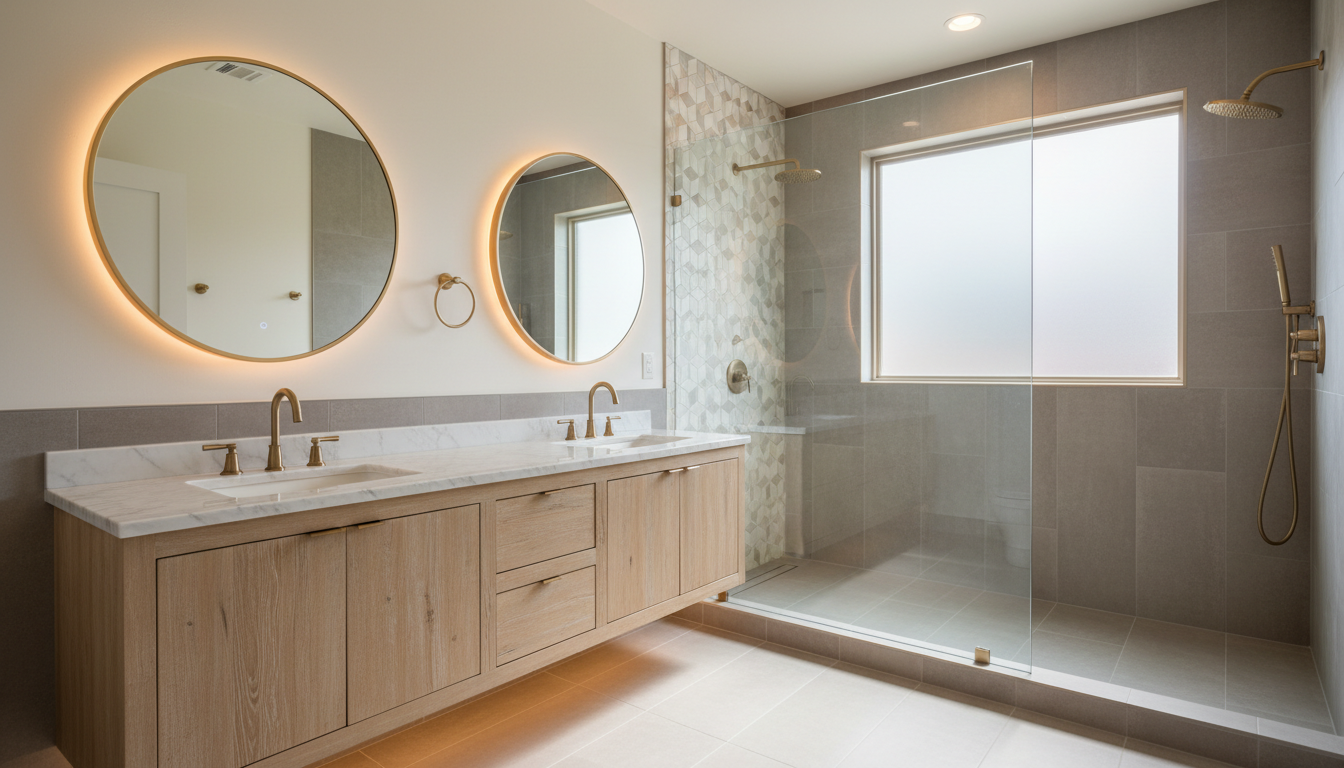
With the common delay culprits on the table, it helps to see what a well-managed project actually looks like when those pitfalls are avoided. Below is a realistic week-by-week bathroom remodel timeline for a full renovation in Fort Worth, covering a mid-to-upper scope with plumbing updates, full-height shower tile, and a frameless glass enclosure.
Weeks 1 to 2: Pre-Construction This phase runs entirely before anyone touches a wall. Design selections get finalized, tile and vanity orders are placed and confirmed with lead times in hand, and the permit application is submitted to Fort Worth's Development Services department. Materials that require three to five weeks for delivery, large-format porcelain, custom glass, furniture-style vanities, are ordered here so they arrive before they are needed rather than after.
Week 3: Demo and Rough Work Demolition happens quickly, but what follows requires sequencing. Plumbing rough-in, electrical updates, and any drain or supply line relocations get completed and inspected before walls close. Scheduling the rough-in inspection proactively is what keeps this week from bleeding into the next.
Weeks 4 to 5: Tile and Waterproofing Backer board, waterproofing membrane, shower tile, and floor tile install in a specific order that cannot be rushed without creating future problems. Full-height tile work on a custom shower takes more time than a three-wall surround. Skipping cure time on setting materials is where corners often get quietly cut.
Week 6: Finish Work Vanity installation, fixture connections, frameless glass enclosure, interior painting, and trim work all land here. This is also when small coordination gaps become visible if earlier phases ran long.
Days 1 to 2 of Week 7: Final Walkthrough and Punch List A dedicated punch list review with the homeowner covers any remaining items before the project closes out.
For cosmetic remodels without plumbing work, this compresses to two to three weeks. For projects involving full plumbing relocation or extensive custom tile, six to eight weeks is honest. The value of mapping this out in writing before demo starts is not administrative, it is operational. A written schedule gives crews clear sequencing targets and gives homeowners something concrete to hold a contractor accountable to. Our Fort Worth bathroom remodel services are built around exactly this kind of structured pre-construction planning.
Why Contractor Scheduling Conflicts Are the Sneaky Cause No One Talks About
The timeline issues covered above, finalized designs, material lead times, permit scheduling, are at least visible problems. Contractor scheduling conflicts are harder to see because they happen entirely on the contractor's side of the project.
Here is how it typically unfolds in the DFW market. A single-crew operation books four bathroom remodels in the same month because demand is high and saying no is difficult. Each homeowner paid a deposit. Each homeowner was told their project is a priority. But one tile crew and one plumber cannot be in four places simultaneously. Somebody's job gets bumped. No announcement is made. The crew just doesn't show up that morning, and the homeowner finds out when they check in at noon.
This isn't a character flaw unique to bad contractors. It's a structural problem in how most small operations manage work. Reactive scheduling means crews move to whichever job is loudest or most urgent that week. If your project hits a quiet phase, like waiting for a rough-in inspection, it becomes easy to reassign that crew elsewhere without communicating the shift to you.
Fort Worth's renovation market runs hot enough that homeowners often feel locked in once a deposit clears. Switching contractors mid-project carries real costs and timeline consequences, which makes the leverage dynamic uncomfortable.
Bridge and Build's approach addresses this directly through dedicated project oversight and scheduled crew commitments tied to specific milestone dates. Daily communication isn't a courtesy feature; it's what keeps a project moving instead of drifting. Homeowners should know where their crew is without having to ask.
How to Protect Your Timeline Before You Sign a Contract
Knowing why delays happen is useful. Having specific questions ready before you sign anything is more useful.
The following applies to any contractor you're vetting in Fort Worth, including Bridge and Build. A contractor who gets defensive about these questions is telling you something important.
Ask for a written schedule with milestone dates, not just a start and end date. A contract that says "project begins March 3, estimated completion March 28" gives you nothing to hold anyone accountable to mid-project. A real schedule shows when demo finishes, when rough-in inspection is scheduled, when tile work begins, and when finish work is expected to wrap. Milestones create checkpoints.
Confirm material lead times before demo starts. Ask specifically about the frameless glass enclosure, the vanity, and any large-format tile. If any of those items are three to five weeks out and the contractor hasn't ordered them yet, your project will sit idle once the walls are open.
Ask how many active projects the contractor is managing right now. There is no trick to this question. The answer tells you a great deal about where your project lands in the priority stack.
Understand what triggers a change order and how fast they get processed. Change orders slow projects down, but an unclear change order process slows them down further. Get the threshold in writing.
Verify that permits are pulled before work begins, not mid-project. In Fort Worth, starting plumbing or electrical work without a pulled permit creates inspection and legal exposure that lands on the homeowner, not just the contractor.
What Happens When Something Unexpected Shows Up Behind the Wall?
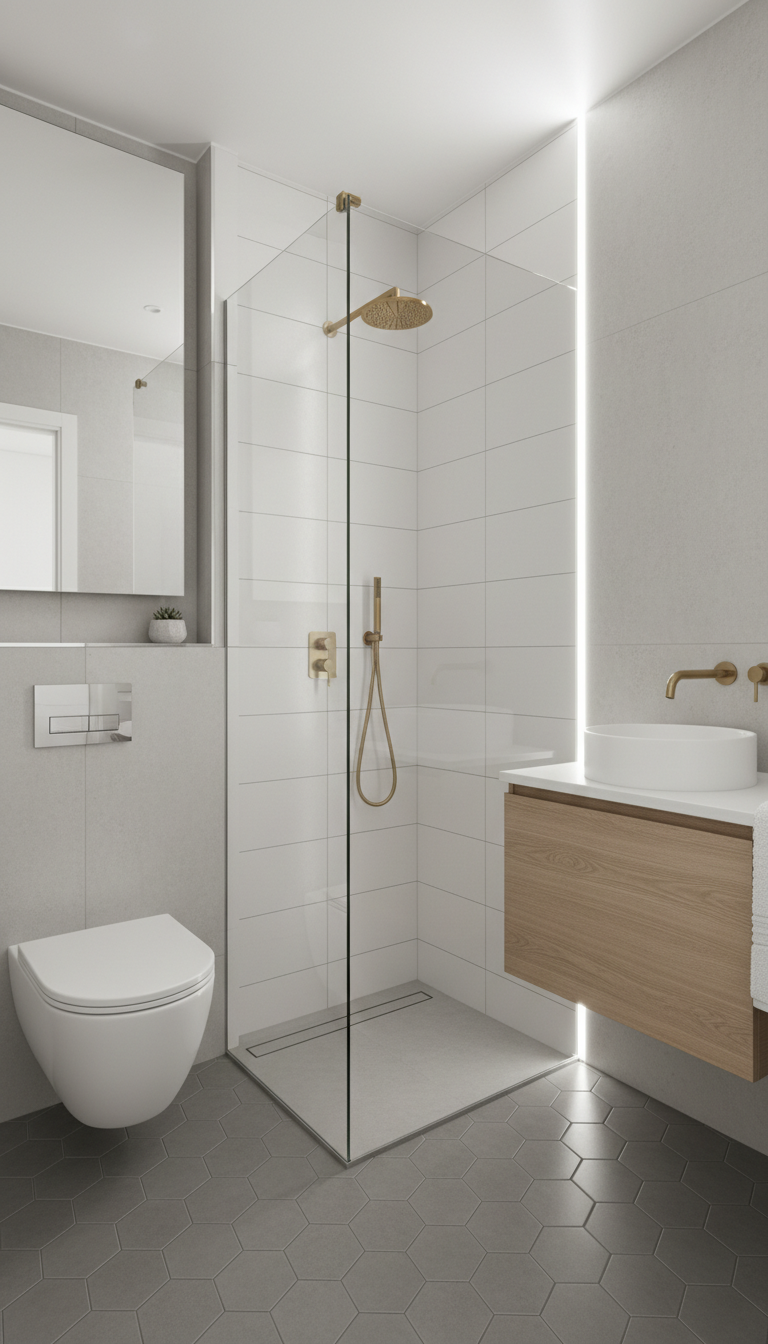
The previous section covers what you can control before a project starts. Hidden conditions behind the wall are a different category entirely, and they deserve a straight answer rather than the vague "surprises happen" language most contractors default to.
Older homes in Fort Worth neighborhoods like Fairmount, Ryan Place, Wedgwood, and parts of Benbrook were built in eras when galvanized steel supply lines, mortar bed shower pans, and undersized drain configurations were standard. Galvanized lines corrode from the inside out, restricting flow and eventually failing. Mortar bed pans crack over time, allowing water to migrate behind tile for years before anyone notices. A 1.5-inch drain line that met code in 1962 may not meet current requirements for a new shower configuration. None of these conditions show up on a pre-construction walkthrough because they are behind finished surfaces.
A competent contractor anticipates these possibilities and builds schedule buffer accordingly, not as a vague cushion, but as a realistic acknowledgment that homes in these neighborhoods have a documented history of producing exactly these findings.
Bridge and Build's approach when something is found: the homeowner hears about it the same day, with a clear explanation of what was found, what the remediation requires, and a revised timeline that lists specific dates rather than a shrug and an estimate. That last part matters more than people expect. "We found mold, it'll add some time" is not a plan. A revised schedule with a defined scope and updated milestone dates is.
Hidden conditions are part of why a bathroom remodel timeline in Fort Worth needs honest buffer built in from the start, not added apologetically after demo reveals a problem.
Bridge and Build's Approach to On-Time Bathroom Remodels in Fort Worth

Everything covered in this article, finalized designs before demo, materials confirmed before walls open, permits pulled ahead of work, scheduled crews with clear milestone dates, and same-day communication when something unexpected shows up, describes how Bridge and Build structures every project from the start.
Before demolition begins, we run a pre-construction planning meeting to lock selections, confirm material lead times, and submit the permit application. Specialty items, full-height large-format tile, frameless glass enclosures, custom vanity configurations, and engineered flooring, are ordered and confirmed before the schedule moves forward. That single step eliminates the most common source of mid-project idle time.
From demo through final walkthrough, dedicated project coordination means daily check-ins and milestone tracking so nothing drifts quietly off schedule. Permit management is handled by our team, not delegated to the homeowner to figure out.
The work we focus on reflects the scope where this structure matters most: plumbing relocations, full-height shower tile, frameless glass, engineered hardwood, and finish packages that require real sequencing discipline to execute cleanly.
We serve Fort Worth, Keller, Southlake, Aledo, and surrounding DFW communities. If you are planning a bathroom renovation and want a realistic schedule before anyone picks up a pry bar, contact us to schedule a walkthrough or review our Fort Worth bathroom remodel services.
Understanding your timeline is the first step toward a successful renovation. While delays are common in the industry, proper planning and clear communication can keep your project on track. If you want expert help navigating the complexities of your next project, Bridge & Build Renovations is here to guide you through every stage. For those ready to start planning their dream space, our team specializes in Fort Worth Bathroom Remodels that prioritize quality and efficiency. We would love to help you create a beautiful, functional room without the typical stress of renovation delays.